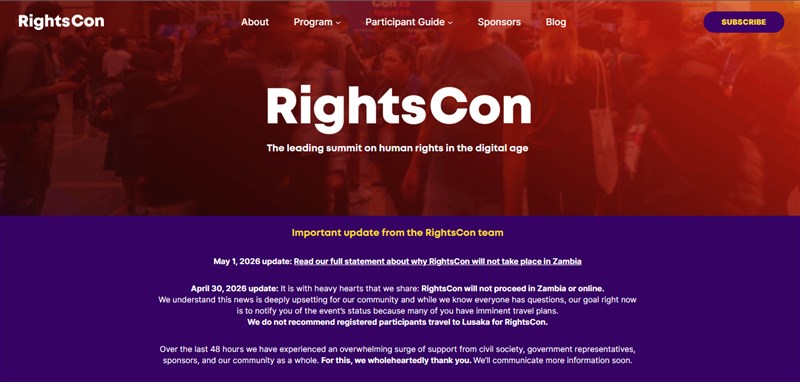
Taipei, May 9 (CNA) Zambia's request to exclude Taiwanese participants and moderate China-related content as conditions for hosting the RightsCon summit was "a clear red line," said the event's organizers, who accused China of transnational repression.
The annual event, self-described as the world's leading summit on human rights in the digital age, had been scheduled for May 5-8 in Lusaka, with more than 2,600 government envoys, business leaders, and NGO representatives expected to attend in person.
But the event was promptly called off by Zambia at the end of April.
Access Now, RightsCon's organizer, has accused Beijing of pressuring Zambian authorities to block Taiwanese participants and prevent discussions deemed unfavorable to China.
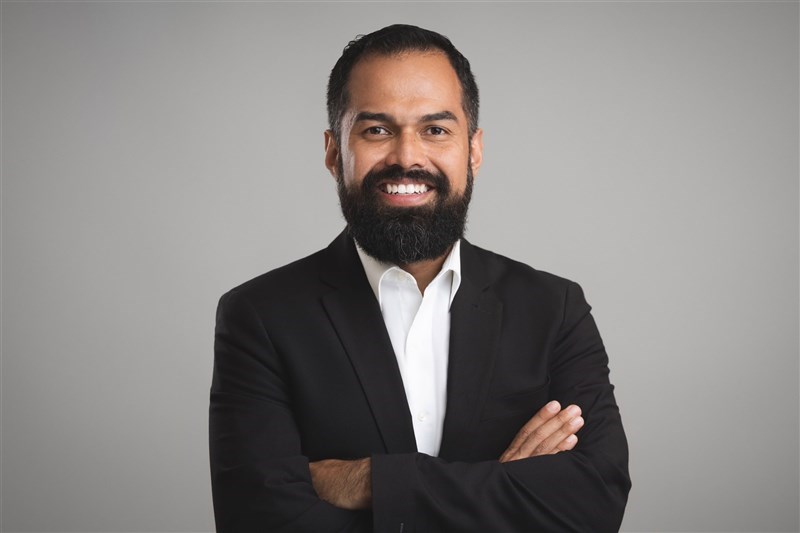
"That was a clear red line for us," Access Now Co-Executive Director Alejandro Mayoral Baños told CNA in a remote interview Sunday, describing the incident as a form of transnational repression.
"We have been pushing for freedom of expression and being able to have a space for activists and human rights defenders" at RightsCon for the past 15 years, Mayoral Baños said.
On April 29, Zambia's government unilaterally announced the summit's "postponement," pending further negotiations to ensure RightsCon's "full alignment with Zambia's national values, policy priorities, and broader public interest considerations."
China's growing reach
RightsCon Director Nikki Gladstone told CNA that she received a phone call on April 27 from an official at Zambia's Ministry of Technology and Science, who said Chinese diplomats were pressuring Zambia ahead of the summit.
Gladstone said she also learned from sources who had spoken directly with Zambian officials that the pressure involved calls to tone down sessions that did not align with Beijing's "one China" policy.
She said Access Now had had experience mitigating risks posed by governments and other stakeholders to RightsCon and its participants, but she described the latest developments as "absolutely unprecedented."
CNA reached out to Zambia's Ministry of Technology and Science, the Ministry of Information and Media, and the Chinese Embassy in Zambia for comment, but had not received a response as of Friday afternoon.
"The whole design, the whole ethos of RightsCon is around inclusion. It's about making sure that folks who are typically excluded have access," Gladstone said during the same interview.
"It was devastating and disappointing to receive that type of request, but there was no way that we would comply with it," she said.
The 2026 summit was expected to feature more than 500 panels, forums, workshops and other activities, covering AI governance, digital access in Africa, censorship, and transnational repression, among other topics, according to RightsCon's program.
Taiwan voices targeted
Several NGOs, including the Open Culture Foundation (OCF), Amnesty International and Article 19, told CNA they had planned to send their Taiwanese staffers to Lusaka.
Chiu E-ling (邱伊翎), national director of Amnesty International Taiwan, said the organization's representative had arrived in Africa before the summit was called off and had to rearrange their plans.
Chiu declined to disclose the representative's name or whereabouts, citing safety concerns.
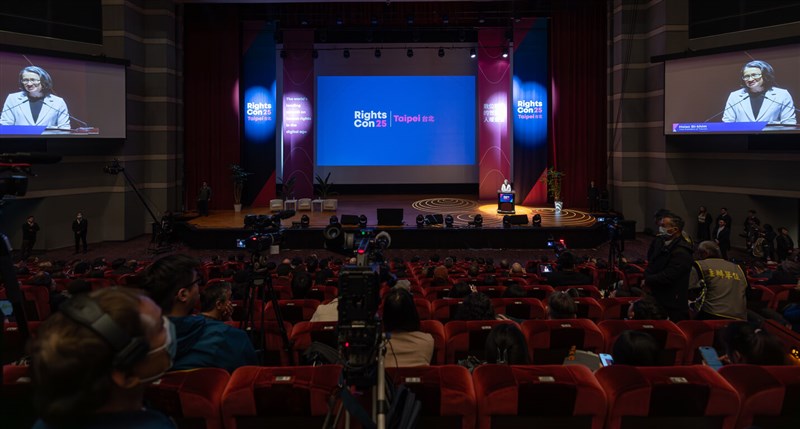
The Taipei-based OCF, Access Now's local partner when RightsCon was held in Taipei last February, estimated around five Taiwanese had planned to go to the summit as speakers, panelists or participants.
A representative from OCF, who spoke on condition of anonymity, said Chinese interference in Taiwan's international participation was nothing new to Taiwan's NGO community.
China has never lacked the will to block Taiwan's international participation, but in the past it might not have had sufficient leverage over other foreign governments to exert influence to this extent, the representative said.
Yen Chen-shen (嚴震生), a political science professor at National Chengchi University, said the incident reflected China's desire to normalize and extend its "one China" principle across the international community.
Zambia has never had diplomatic relations with Taiwan and has maintained close ties with China since its independence in 1964, Yen said, adding that the African nation was economically dependent on China and had received Chinese aid.
This "puts us at a disadvantage," he said, as Taiwan could face similar challenges more often in future engagements with countries like Zambia.
The OCF said the incident was unlikely to change its overall outreach strategy, but that it would conduct more careful assessments of sociopolitical conditions in individual countries and regions in the future.
- Politics
Lai's WWII remarks warn of China's bid to reshape world order: Analysts
10/10/2026 07:27 PM - Business
Gasoline, diesel prices to remain unchanged next week: CPC
10/10/2026 06:09 PM - Politics
Opposition leaders criticize DPP, Lai in National Day remarks
10/10/2026 04:48 PM - Politics
Ex-President Tsai calls for deeper ties between Taiwan, Silicon Valley
10/10/2026 04:25 PM - Society
Filipino worker hospitalized, over 300 evacuated in Tainan dorm fire
10/10/2026 03:59 PM