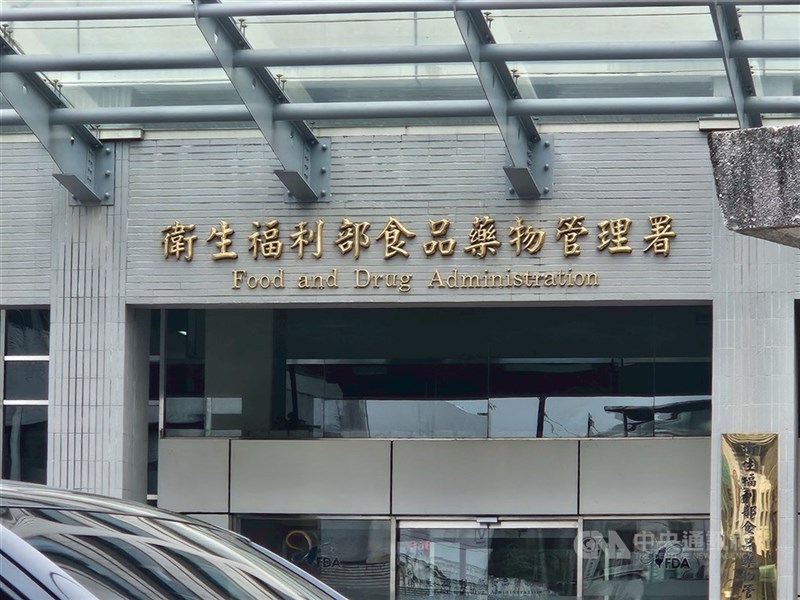
Taipei, Oct. 1 (CNA) A probiotic seller has been fined a total of NT$4.02 million (US$125,000) this year for repeated violations over advertisements falsely claiming that the product could "reverse kidney disease," Taiwan's Food and Drug Administration (TFDA) said Thursday.
The Huo Hua Sheng (活化勝) probiotic product has been ordered to remove the offending advertisements and fined a cumulative NT$8.9 million since 2024, while its endorser, nephrologist Chiang Shou-shan (江守山), has been referred for disciplinary action.
The TFDA said the product and Chiang had appeared frequently in television and other media advertisements promoting purported health benefits and making exaggerated claims that the probiotic could treat or reverse kidney disease.
Cheng Wei-chih (鄭維智), head of the TFDA's Planning and Technology Management Division, told reporters that the product mainly contains probiotics and lactic acid bacteria, but the advertisements could lead consumers to believe that the food had therapeutic effects.
Such claims could also cause people to delay seeking medical treatment, Cheng said, adding that the advertisements violated regulations prohibiting food advertisements from making false, exaggerated or misleading claims or claiming medical effects.
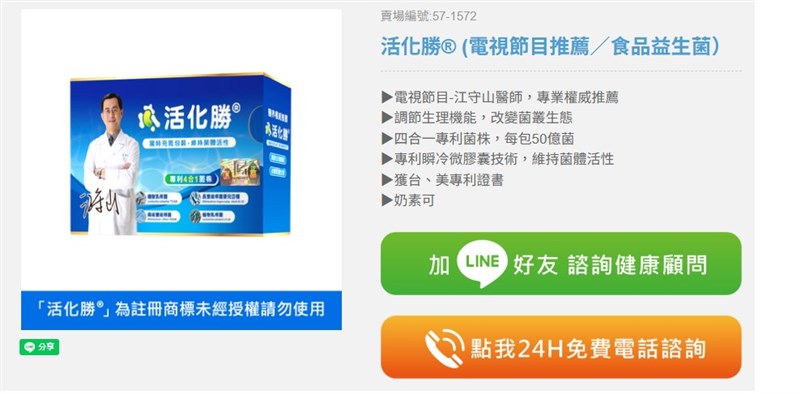
The Huo Hua Sheng product has been fined repeatedly over its advertisements. According to TFDA data, authorities imposed NT$3.08 million in fines in 2024, followed by NT$1.8 million in 2025.
So far this year, authorities have found seven violations involving the product on four television channels and imposed another NT$4.02 million in fines, bringing the cumulative total to NT$8.9 million.
The TFDA has also asked television industry groups to ensure that the offending advertisements are removed from their member channels.
Chiang has been referred to Taipei City Health Bureau for disciplinary action under the Physicians Act. Possible penalties include a warning, restrictions on the scope of medical practice or revocation of his medical license, the TFDA said.
The TFDA reminded consumers, particularly those with kidney disease, that food products are not medicines and cannot replace proper medical treatment or claim to cure diseases.
- Business
Micron's Taiwan investment exceeds NT$1.6 trillion: Top executive
10/01/2026 05:00 PM - Business
Starlux launches 5 weekly flights between Taiwan and Bali
10/01/2026 04:27 PM - Business
U.S. dollar closes lower on Taipei forex market
10/01/2026 04:22 PM - Society
TFDA fines probiotic firm for 7th time this year over kidney disease ads
10/01/2026 04:07 PM - Politics
CGA appoints vice admiral as deputy head to counter China threat
10/01/2026 03:58 PM