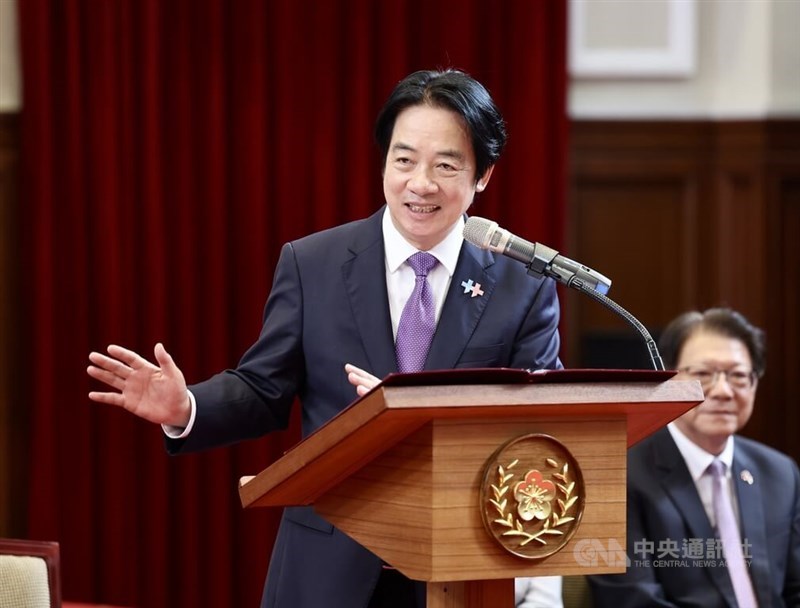
Taipei, Oct. 11 (CNA) President Lai Ching-te's (賴清德) National Day address maintained a steady stance on cross-strait issues while reaffirming Taiwan's commitment to peace, a political science scholar said Sunday, adding that the speech gave Beijing no pretext for military coercion or provocation.
In the speech, titled "Taiwan's Future: A City upon a Hill, the Salt and Light of the World," delivered Saturday, Lai said Taiwan should bravely and confidently build a "city upon a hill" amid an era marked by wars, authoritarian expansion and rapid changes in the global order.
He said the vision represented an aspiration for Taiwan's future and a responsibility the country is willing to undertake, rather than an act of self-praise.
Chen Shih-min (陳世民), an associate professor in National Taiwan University's Department of Political Science, said Lai used the metaphor to highlight Taiwan's decades of efforts and achievements in becoming a model of democracy, freedom and economic development.
Chen said the speech reflected three key principles: maintaining stability, expressing a clear stance, and reaffirming Taiwan's role in safeguarding peace.
Lai has consistently adopted a pragmatic approach in major speeches, focusing on domestic achievements, Taiwan's international role and cross-strait relations, Chen said, adding that the latest address did not give Beijing an excuse for military coercion or provocation.
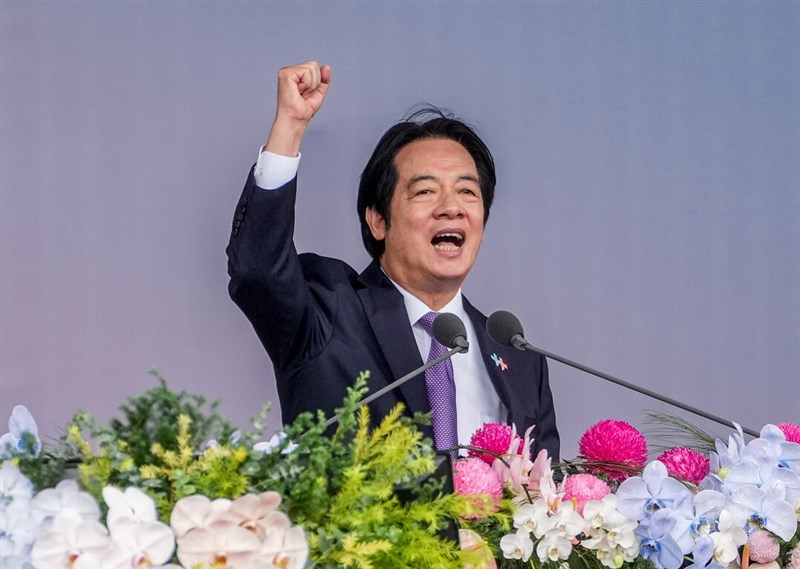
On U.S.-China relations, Chen said that while outside observers have often believed strategic competition between the two powers benefits Taiwan, Lai made clear that Taiwan also welcomes dialogue between Washington and Beijing to manage competition and reduce the risk of conflict in the Taiwan Strait.
Lai's reaffirmation that Taiwan is a guardian of peace, and that strengthening defense capabilities is intended to deter war rather than provoke conflict, also countered claims that Taiwan is a destabilizing force, Chen said.
Separately, Tsai Jung-hsiang (蔡榮祥), a professor of political science at National Chung Cheng University, said Lai's speech focused on three areas: reaffirming the definition of peace, clarifying historical narratives and strengthening ties with the international community.
Tsai said Lai emphasized that peace must be maintained through strength, including the development of asymmetric weapons, enhanced defense capabilities and cooperation with Indo-Pacific partners.
Tsai also cited Lai's remarks on Taiwan's economic performance, including projected annual economic growth of more than 11 percent, trade with the United States exceeding that with China and Hong Kong, and the Taiwan Stock Exchange's benchmark index reaching 49,000 points, making it the world's fourth-largest stock market in terms of market capitalization.
These figures showed that Taiwan's economy has continued to thrive and become more closely connected with the world despite reduced economic dependence on China, Tsai said.
- Politics
Lai's National Day speech steady, avoided provoking Beijing: Scholar
10/11/2026 06:53 PM - Society
Songshan: The ups and downs of Taipei's 'other airport'
10/11/2026 06:36 PM - Society
Philippines opens largest OFW service center in Taipei, eyes expansion
10/11/2026 06:11 PM - Society
Medical professionals, social workers speak up amid drug policy dispute
10/11/2026 05:56 PM - Politics
Eswatini king thanks Taiwan for helicopter donation
10/11/2026 04:38 PM