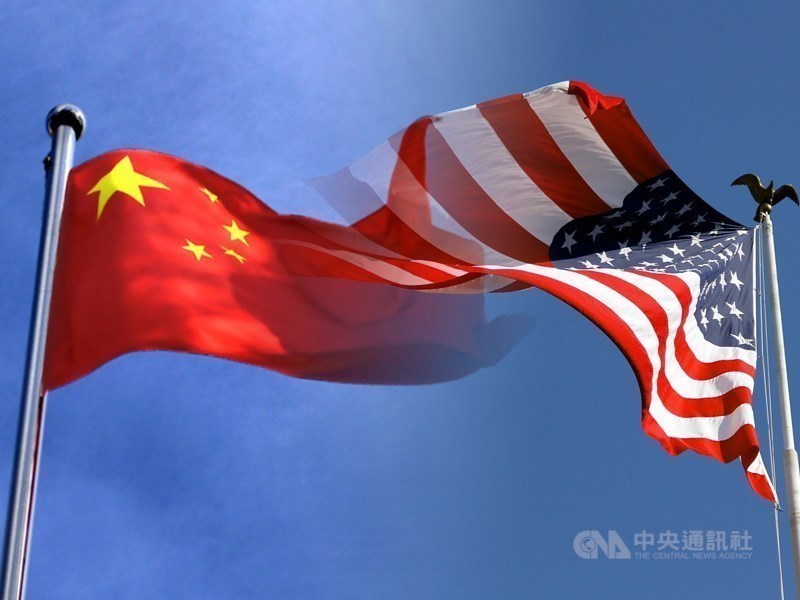
Washington, Oct. 3 (CNA) Fundamental differences between the United States and China make major disputes difficult to resolve, creating an opportunity for Taiwan to deepen economic and security ties with Washington, China expert Miles Yu (余茂春) said Saturday.
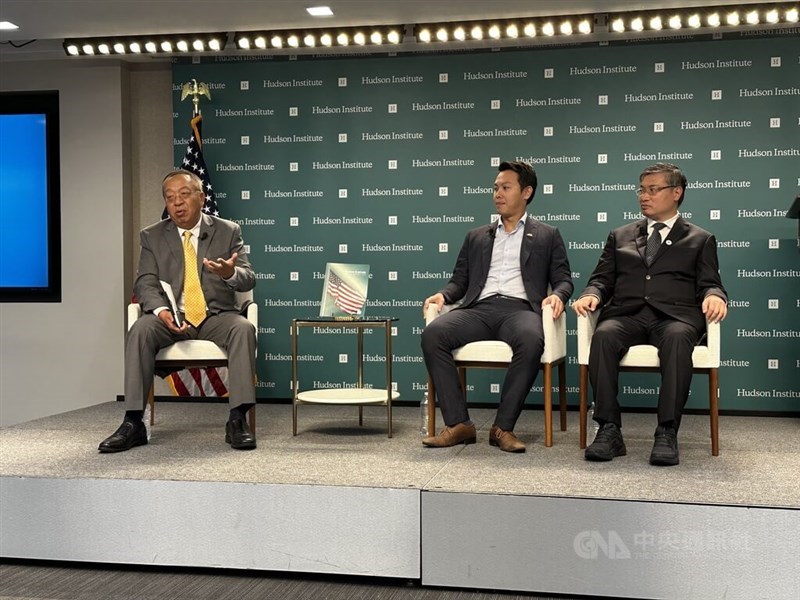
Yu, director of the China Center at the Washington-based think tank Hudson Institute and a former China policy adviser in the first Trump administration, made the remarks on the sidelines of a Taiwan National Day event in Maryland.
Regarding the Trump-Xi summit in late September and their two expected meetings later this year, Yu said differences in the two countries' political systems and how their governments operate make major disputes, including over tariffs and regional security, difficult to resolve.
For now, the two sides are seeking to maintain strategic stability, avoid an unintended clash, and buy time to strengthen themselves, he said.
Yu said the need for repeated summits and elaborate ceremony suggested, in his view, that the two countries had "many fundamental problems that cannot be resolved."
Asked how Taiwan should respond, Yu said Washington and Beijing's inability to "come together on some fundamental issues" represented "an opportunity" for Taiwan.
Further integration between Taiwan and the U.S. in trade and economic affairs is important, Yu said, but "the most crucial thing is integration on security."
"For Taiwan, the foreign hostile force is the Chinese Communist Party (CCP)," Yu said, adding that, in his view, the CCP is also the U.S. government's top foreign hostile force.
He therefore argued that Taiwan and the U.S. require "common defense," with a high degree of security integration, and that defending Taiwan also serves U.S. national security interests.
My take on the Trump-Xi Summit last week in the Washington Times: https://t.co/u50vipcpmr
— MilesYu 余茂春 (@milesyu10) September 29, 2026
At a separate forum earlier in the week, Hudson Institute's Asia-Pacific Security Chair Patrick M. Cronin said that the temporary U.S.-China trade truce showed neither side intended to surrender its "most valuable source of leverage."
Ahead of the Trump-Xi summit, U.S. Treasury Secretary Scott Bessent said the truce, originally set to expire on Nov. 10, had been extended for two months to Jan. 10, 2027.
Cronin said Beijing "has little reason" to give up its critical minerals advantage, while Washington "should be equally reluctant to squander one of its greatest strategic advantages: its network of capable allies and partners."
https://t.co/ALYXkELLuW Great discussion on Japan, Korea, Southeast Asia, Europe, and the strategy and implications of the US-China summit @WillRevenge @KUFSofficial's #Takahiro_Tsuchiya (Kyoto University of Foreign Studies @KenWeinstein @PMCroninHudson
— Patrick M. Cronin (@PMCroninHudson) September 30, 2026
He said the temporary easing of tensions should therefore be used as a period of "accelerated American and allied renewal," rather than simply as a respite from confrontation.
With China set to mark the centennial of the People's Liberation Army next year, Cronin said the U.S. and its allies need to strengthen "deterrence by denial around Taiwan and elsewhere in the Western Pacific."
He added, however, that military deterrence alone would not be enough, and called for stronger industrial capacity in areas including energy, shipbuilding, munitions, autonomous systems, semiconductors and artificial intelligence to "sustain deterrence over the long term."
- Business
Taiwan shares open higher
10/14/2026 09:09 AM - Politics
Taipei Mayor Chiang agrees to at least one televised debate with Shen
10/13/2026 08:45 PM - Society
Animal groups renew push for referendum on full ban of wild boar snares
10/13/2026 08:36 PM - Science & Tech
NTHU study finds plant compound may help treat brain injuries
10/13/2026 07:50 PM - Business
Economists see AI boom sustaining Taiwan growth, urge diversification
10/13/2026 07:25 PM