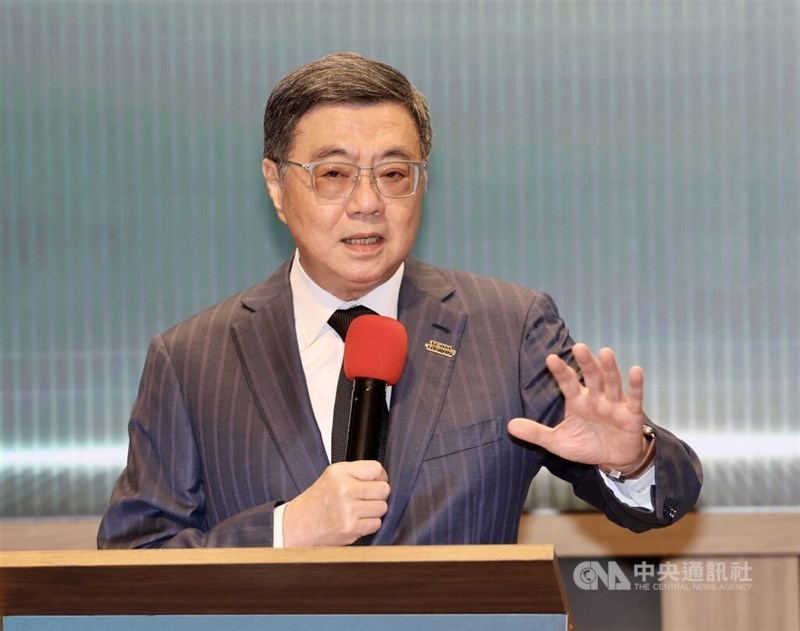
Taipei, Sept. 10 (CNA) Premier Cho Jung-tai (卓榮泰) on Wednesday defended the government's use of a controversial "countersignature" power to block the implementation of bills passed by the opposition-controlled Legislature, the same day a U.S. scholar criticized the tactic as “blatantly unconstitutional.”
At a forum in Taipei Wednesday, Kharis Templeman, a research fellow at the Hoover Institution, analyzed the "deadlock" affecting Taiwan's democracy since it entered a period of divided government in 2024.
During the speech, Templeman criticized Cho's unprecedented use of a countersignature power to block bills approved by the Legislature, saying that he had "created whole cloth a veto power for himself."
Although he understood the political logic behind the move, Templeman said, he nevertheless viewed it as "blatantly unconstitutional."
The term "countersignature" comes from Article 37 of the Republic of China Constitution, which states that the president shall promulgate laws and issue mandates "with the countersignature of the President of the Executive Yuan."
Since December 2025, Taiwan's government has invoked the countersignature to block implementation of eight bills passed by the Legislature -- despite it never having been previously used to block legislation.
Cho's defense of the countersignature
During a radio interview that aired Wednesday evening, Cho also raised the issue of the countersignature, saying it was first necessary to understand that Taiwan is neither a parliamentary nor a presidential system.
In a parliamentary system, he said, a prime minister has the power to dissolve the Legislature and call elections, while in a presidential system, the president has veto power over the Legislature.
Taiwan, however, is a "semi-presidential system" (雙首長制), in which the president has "no power to act" if the Legislature passes a bill that is unconstitutional, illegal, destructive of fiscal discipline, or would impinge on the president's authority or harm national security, he said.
In Taiwan's system of government, the president can request the reconsideration of a bill passed by the Legislature, but it can be overruled with a simple majority.
On those grounds, Cho appeared to suggest, the executive branch's ability to check the legislative branch in Taiwan resides in the premier's power to withhold a countersignature.
"While some people say the countersignature is [for the premier] to check the power of the president," Cho said, this view shows a "lack of understanding" of the ROC Constitution.
Because the premier is appointed or dismissed unilaterally by the president, a premier who refused to countersign legislation the president supported would be replaced "immediately," he explained.
At this point, interviewer Huang Wei-han (黃暐瀚) noted that prior to constitutional revisions (in 1997), the Legislature was required to confirm the premier, in theory making them more able to check the president, but Cho responded that this is no longer the case.
Motion of no confidence?
At a press conference on Thursday, DPP Legislator Chuang Jui-hsiung (莊瑞雄) said that if the opposition wants to resolve the current "constitutional controversy," it can always pass a motion of no confidence against the premier in the Legislature, which would require Cho to step down.
However, this would carry risks, he said, as it would also give the president the option to dissolve the Legislature and call a new legislative election.
Chuang was referring to provisions contained in Article 2 of the Amended Articles of the ROC Constitution. A move to dissolve the Legislature has never happened under Taiwan's current constitutional framework.
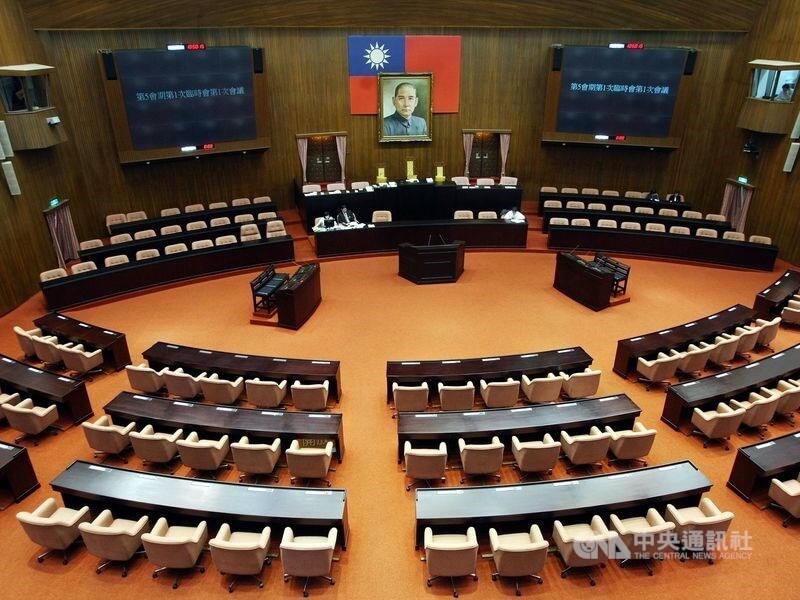
Another layer of the dispute: the Constitutional Court
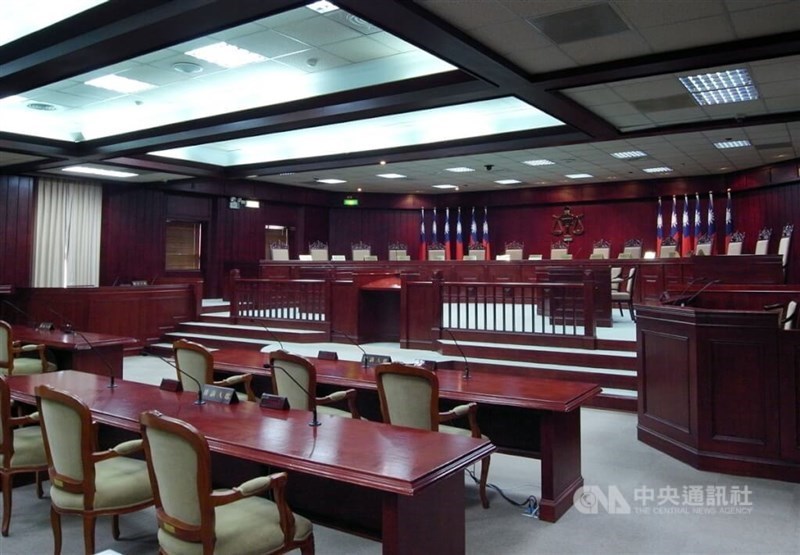
In ordinary circumstances, Taiwan's Constitutional Court might also be called in to decide whether the government's use of the countersignature is constitutional.
The court, however, has been mired in its own controversy since Jan. 25, 2025, when amendments passed by the Legislature took effect requiring a minimum of 10 justices to hear and rule on a case.
This immobilized the 15-seat court, which has had only eight members left after seven completed their terms at the end of October 2024, and lawmakers blocked nominations to replace them.
The DPP has argued that the main opposition Kuomintang (KMT) purposely paralyzed the court to avoid scrutiny of its legal amendments. The KMT, meanwhile, has long viewed the court as politically biased, since all its members were appointed and confirmed when the presidency and Legislature were controlled by the DPP.
On Dec. 19, 2025, five justices on the court ruled that the stricter quorum requirements for the court were unconstitutional and that the court could therefore resume hearing and deciding cases.
The court's three other justices publicly denounced the ruling, and have refused to join the other five justices on the six cases the court has ruled on this year.
This has raised concerns of a constitutional crisis, since the validity of any major ruling by a reduced bench of only five justices could be called into question.
- Business
Taiwan shares open higher
10/02/2026 09:08 AM - Business
Taiwan's manufacturing activity expands at fastest pace in 5 years
10/01/2026 09:12 PM - Culture
Drama film 'Arrested Memory' leads 11 Golden Horse nominations
10/01/2026 09:09 PM - Politics
- Sports
Taiwan's medal standing at 2026 Aichi-Nagoya Asian Games
10/01/2026 08:46 PM