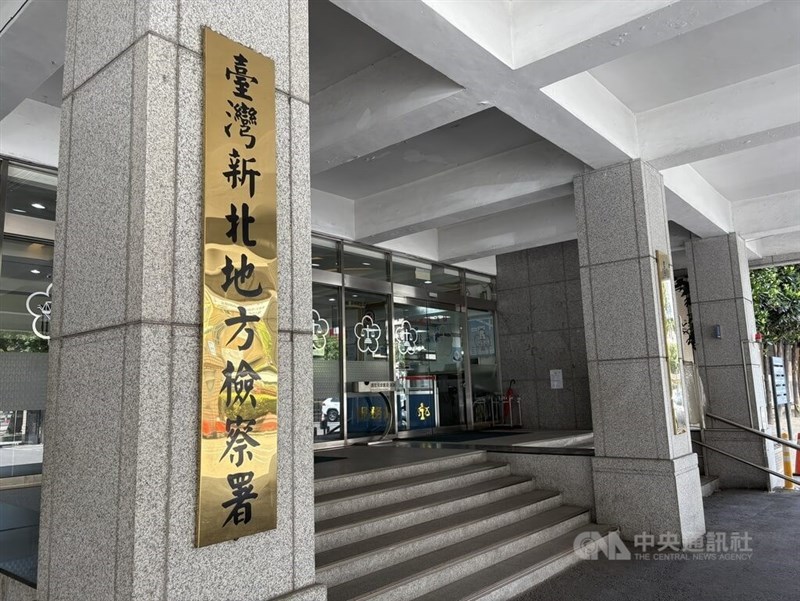
New Taipei, Oct. 6 (CNA) The Taiwan New Taipei District Prosecutors Office has indicted 10 people for allegedly reselling restricted military-grade chips from two American companies to Hong Kong for onward delivery to China.
The defendants include Chen Chien-hsiung (陳建雄), who runs several technology companies in Taiwan, his brother and several others. They have been charged with fraud, forgery and money laundering, the prosecutors office said in its indictment published last week.
Prosecutors are seeking a 10-year prison sentence for Chen and sentences ranging from one to eight years for the other defendants.
According to the indictment, Chen, a former salesperson for a chip distributor, learned that the government-funded National Chung-Shan Institute of Science and Technology (NCSIST) was an authorized end user of products marketed by U.S. technology companies Analog Devices Inc. (ADI) and Texas Instruments Inc. (TI).
Starting in 2017, Chen allegedly colluded with others to falsely name the NCSIST as the end user and forge the stamp of the relevant NCSIST department to pass the required verification process. They then purchased restricted high-speed chips that could be used for military purposes, prosecutors said.
After the chips were imported into Taiwan, the defendants allegedly resold them to buyers in Hong Kong, including China-controlled companies, profiting from the price difference.
The scheme generated more than NT$300 million (US$9.43 million) in illegal proceeds, prosecutors said.
Prosecutors also found that to avoid detection and hide the proceeds, the defendants allegedly relabeled the products they purchased from ADI and TI -- which had originally been manufactured in the Philippines, South Korea and Singapore -- as "Made in Taiwan."
This allowed them to evade scrutiny by customs authorities and the Ministry of Economic Affairs' International Trade Administration, the indictment said.
Prosecutors said the defendants exported the chips illegally for financial gain despite knowing that the U.S. Department of Commerce prohibited their sale to China, Hong Kong and Macau.
They added that the chips were "clearly" supplied to China's military industry for use in producing advanced weapons.
Prosecutors said the defendants' actions posed a serious risk to Taiwan's national security, adding that they could also mislead the U.S. into believing that Taiwan had deliberately helped China obtain the chips, damaging Taiwan's international image.
Prosecutors said the U.S. and Taiwan both tightly regulate strategic high-tech products, including how they are distributed and used.
Buyers must provide end-user statements or Know Your Customer's Customer (KYCC) documentation for verification before manufacturers or distributors can sell such products.
- Politics
New THSRC trains may pave way for family cars, senior citizen cards
10/06/2026 09:00 PM - Politics
Shen, Chiang open to debate over drug policy in Taipei mayoral race
10/06/2026 08:41 PM - Society
10 indicted for reselling restricted chips to Hong Kong for China
10/06/2026 08:26 PM - Society
Kuai Kuai workers end 5-day strike with relocation compensation deal
10/06/2026 07:46 PM - Politics
Foreign minister opens Phoenix office, 14th U.S. diplomatic post
10/06/2026 06:55 PM