INTERVIEW/Taiwan eyeing global drone role via partnerships: Vice President Hsiao
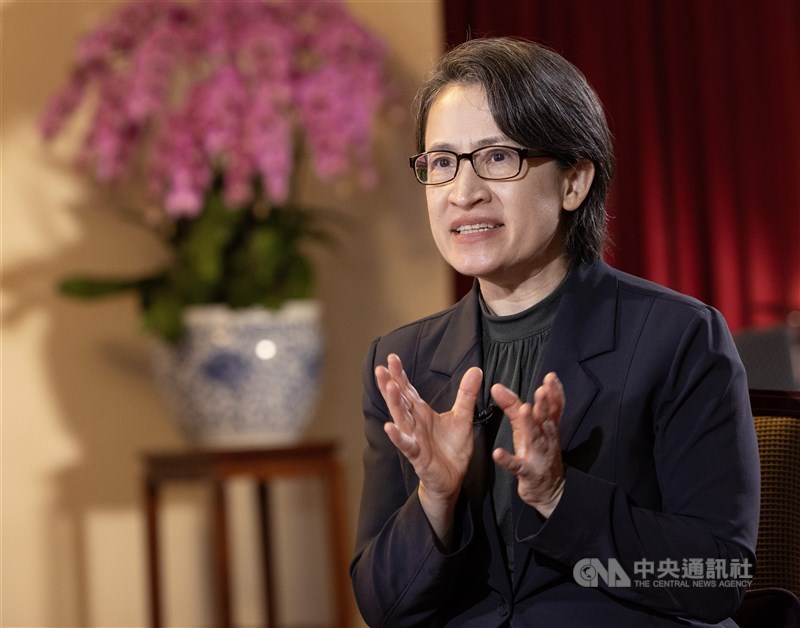
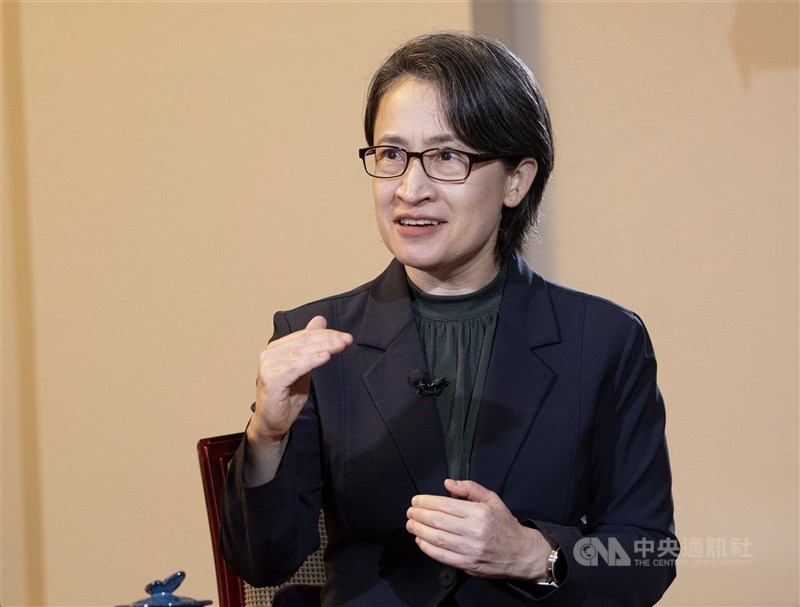
Taipei, Aug. 26 (CNA) Taiwan should leverage its strengths in cybersecurity and pursue international partnerships to secure a central role in the global drone supply chain as demand for drones booms worldwide, Vice President Hsiao Bi-khim (蕭美琴) has said.
Foreign governments and companies have not only purchased drones but also key components, including sensing modules, propulsion systems and flight-control systems, from Taiwan in recent years, Hsiao told CNA in an interview on Aug. 21.
"They've come to Taiwan mainly because they think Taiwan can provide more trustworthy non-red supply chains," Hsiao said, referring to drone supply chains that do not rely on Chinese components.
The vice president characterized Taiwan's desire to build an international drone presence as an effort to capitalize on growing commercial opportunities, as unmanned vehicles become increasingly important in warfare and other facets of life.
"I believe the future (of drones) lies not only in military applications, but also in the vast opportunities offered by civilian markets across various sectors," Hsiao said. "These opportunities could enable Taiwan to shape a new industry with significant business potential."
● Taiwan eyeing global drone role via partnerships: Vice President Hsiao
Given the apparent urgency to develop the sector, Taiwan has been encouraging drone manufacturers to obtain U.S.-administered cybersecurity certifications.
Earlier this month, the Ministry of Economic Affairs' Industrial Development Administration led 12 manufacturers to Washington, D.C., to learn about the Blue UAS certification criteria established by the U.S. Defense Innovation Unit and market demand.
"Drones are not used only for military purposes...They are also used for inspections and in areas involving privacy and public safety," Hsiao said.
"Buyers want the payloads, sensors and data-transmission systems on drones to have a certain level of trustworthiness."
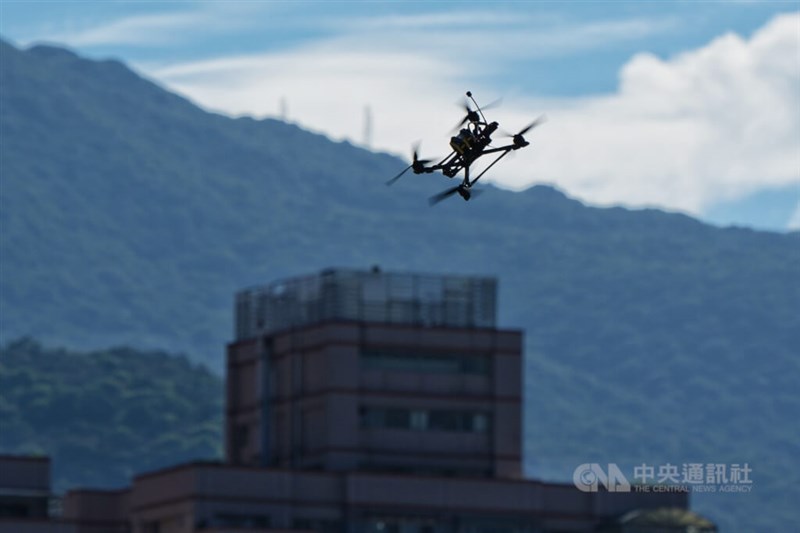
Meanwhile, technological partnerships and original equipment manufacturing (OEM) arrangements have emerged as forms of international cooperation in drone production, Hsiao said.
Technological cooperation allows Taiwanese and foreign drone manufacturers to complement each other's strengths, she said, adding that such partnerships could strengthen both sides' positions in the global market.
International cooperation, including the procurement of dual-use drones through direct commercial sales, can also help Taiwan quickly develop capabilities it lacks in drone warfare, Hsiao said.
Though Taiwan's drone sector has its strengths, it also has gaps that still need to be filled.
In April, Chiou Chyou-huey (邱求慧), director-general of the Industrial Development Administration, said the government was funding manufacturers to develop AI imaging modules and chips, flight control systems and modules, and other items to close key technological gaps.
He expected Taiwan to acquire the capability to manufacture critical components it currently sources from overseas by March 2027.
Drone testing
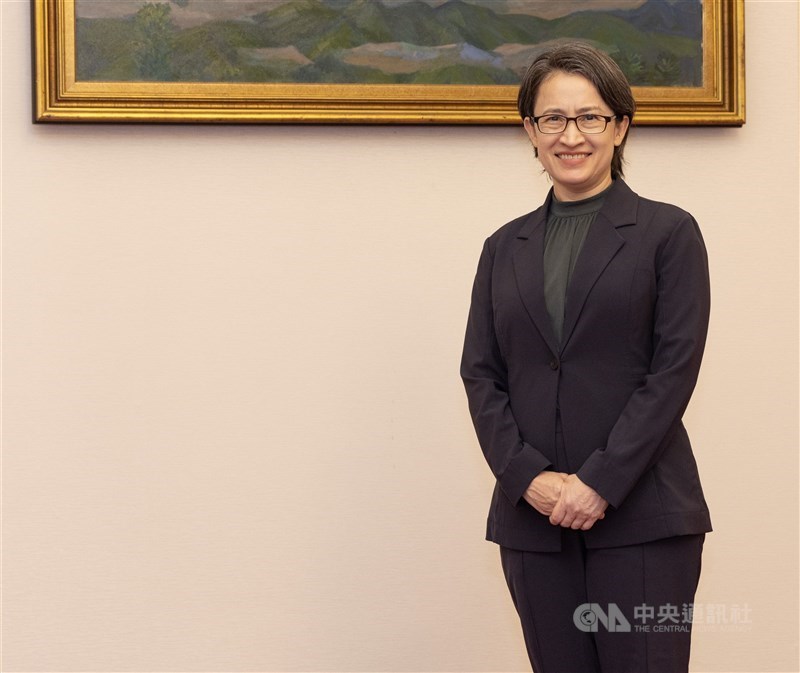
Hsiao said testing is another crucial area in drone development that Taiwan could use to deepen cooperation with like-minded international partners.
Taiwan has "crowded" airspace where drone testing could potentially affect aviation and residential safety, Hsiao said.
Taiwan could bring its drones to like-minded countries with larger airspaces to test new technology, potentially in environments involving GPS interference or more complex electromagnetic conditions, and then bring them back for improvements, Hsiao said.
"Many people tell us that Ukrainian drone technology has developed so quickly because they test their drones every day. They do not have to go through applications or obtain airspace approvals," Hsiao said.
"Everything we are doing is intended to prevent us from ending up in Ukraine's situation. We do not want to have to use battlefields and bloodshed to validate the capabilities of our drones."
As Hsiao sees it, Taiwan's ability to conduct R&D as well as OEM and serial production is a major reason why international companies trust it as a reliable co-production partner.
Taiwan's R&D capabilities, in particular, have matured to the point where it could "gradually overtake" its competitors technically, she said.
The country's drone industry must, therefore, complete its skill set if it is to compete with leaders in the industry such as China, the U.S. and Ukraine, Hsiao argued.
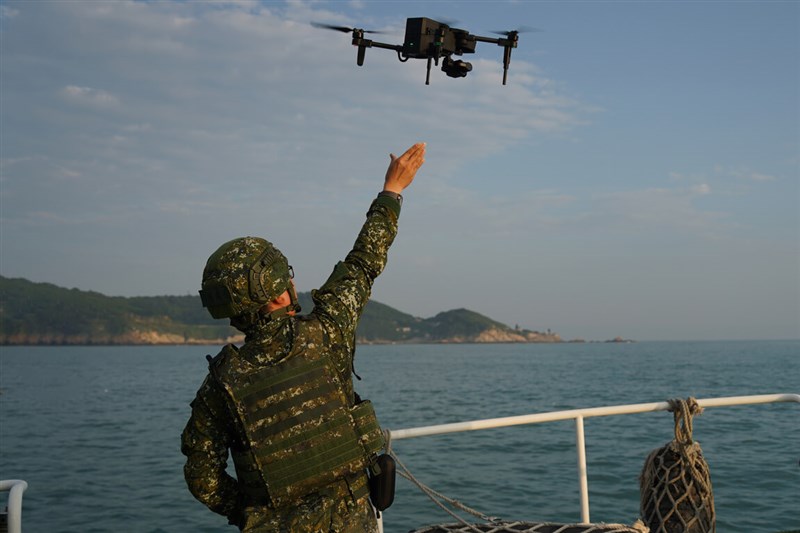
"One key area is AI," noted Hsiao, calling it a main driving force behind drone evolution, with new drone technology emerging on the battlefield of the Russia-Ukraine war every few weeks.
Hsiao said Taiwan is expected to play a "key role" in the development of AI-powered drones and identified edge computing, on-device AI and embodied AI as critical emerging technologies that can be applied to drones.
Though Taiwan is a relatively latecomer to drone manufacturing, Hsiao said she was confident that the country will soon catch up with the competition, noting that the drone industry has posted rapid growth.
"The volume of drones we exported in the first half of this year has already exceeded the volume exported during all of last year," Hsiao said.
Much of that growth, however, has been driven by warfare or demand from countries in regions facing conflict.
In the first seven months of 2026, unmanned aircraft exports totaled US$241.39 million, up 1,239 percent from the US$18.03 million shipped in the same period in 2025, according to International Trade Administration statistics.
Of the total, 75.6 percent by value was shipped to the Czech Republic (US$137.17 million) and Poland (US$45.31 million), and the drones were likely eventually destined for Ukraine, according to defense analysts.
Another US$47.18 million worth of drones was shipped to Saudi Arabia, all in June 2026, the statistics showed.
Drone diplomacy
Asked about Taiwan's "drone diplomacy" initiative, Hsiao said the policy presents Taiwan with new opportunities as Beijing has relentlessly tried to sideline Taiwan in the international community.
During her visit to Palau in June, Hsiao and Palauan President Surangel S. Whipps Jr. officiated a ceremony at which Taiwan donated four drones to its Pacific ally for patrol and rescue purposes.
Hsiao told Radio Taiwan International (RTI) on Aug. 21 that although the drones Taiwan gifted Palau were trainer models, Palau could require drones for other purposes -- for example, when conducting reconnaissance or maritime law enforcement missions, or delivering medicine to remote areas.
"I think these capabilities will develop alongside the establishment of Taiwan's domestic manufacturing capabilities and, in the future, could help our diplomatic allies and other countries in the Indo-Pacific that need them."
![Strategic partnership key to Taiwan-U.K. cooperation: Deputy economics minister]() Strategic partnership key to Taiwan-U.K. cooperation: Deputy economics ministerTaiwan's Deputy Minister of Economic Affairs Cynthia Kiang (江文若), who has just concluded an annual economic and trade dialogue with her U.K. counterpart in London, said Friday that establishing a strategic partnership is key to bilateral cooperation.10/03/2026 01:53 PM
Strategic partnership key to Taiwan-U.K. cooperation: Deputy economics ministerTaiwan's Deputy Minister of Economic Affairs Cynthia Kiang (江文若), who has just concluded an annual economic and trade dialogue with her U.K. counterpart in London, said Friday that establishing a strategic partnership is key to bilateral cooperation.10/03/2026 01:53 PM![Taiwan, democracies must build resilience against China, Russia: Scholar]() Taiwan, democracies must build resilience against China, Russia: ScholarTaiwan and other democracies must strengthen their resilience against the "sharp power" wielded by authoritarian regimes such as China and Russia to defend their shared democratic values, a visiting American scholar said Monday.09/21/2026 04:39 PM
Taiwan, democracies must build resilience against China, Russia: ScholarTaiwan and other democracies must strengthen their resilience against the "sharp power" wielded by authoritarian regimes such as China and Russia to defend their shared democratic values, a visiting American scholar said Monday.09/21/2026 04:39 PM![European Parliament vice president praises Hsiao as 'role model' for women]() European Parliament vice president praises Hsiao as 'role model' for womenEuropean Parliament Vice President Pina Picierno on Saturday praised Taiwanese Vice President Hsiao Bi-khim (蕭美琴) as a role model for freedom-loving women around the world and told CNA that she would soon begin planning a trip to Taipei after accepting Hsiao's invitation to visit.09/13/2026 01:08 PM
European Parliament vice president praises Hsiao as 'role model' for womenEuropean Parliament Vice President Pina Picierno on Saturday praised Taiwanese Vice President Hsiao Bi-khim (蕭美琴) as a role model for freedom-loving women around the world and told CNA that she would soon begin planning a trip to Taipei after accepting Hsiao's invitation to visit.09/13/2026 01:08 PM

- Politics
New THSRC trains may pave way for family cars, senior citizen cards
10/06/2026 09:00 PM - Politics
Shen, Chiang open to debate over drug policy in Taipei mayoral race
10/06/2026 08:41 PM - Society
10 indicted for reselling restricted chips to Hong Kong for China
10/06/2026 08:26 PM - Society
Kuai Kuai workers end 5-day strike with relocation compensation deal
10/06/2026 07:46 PM - Politics
Foreign minister opens Phoenix office, 14th U.S. diplomatic post
10/06/2026 06:55 PM