By Wu Hsin-yun and Sunny Lai, CNA staff reporters
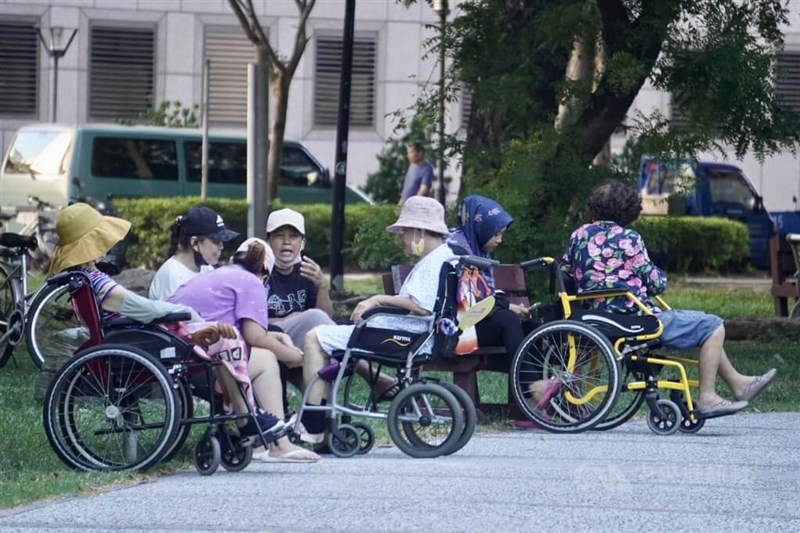
For 16 years, Indonesian caregiver Shirley has cared for Taiwanese families while quietly building a life of her own.
She learned to cook local dishes, introduced Indonesian food at church gatherings, and came to regard Taiwan as home, saying, "I'm already used to life in Taiwan."
Now 46, she hopes to remain in Taiwan permanently.
But despite spending more than one-third of her life in Taiwan, Shirley remains caught in a contradiction: the government wants experienced migrant workers like her to stay, yet its rules leave permanent residency far beyond her reach.
Under the current rules, Shirley would have to almost double her pay to qualify for permanent residency in Taiwan, a virtual impossibility, but the government has shown little inclination to make changes.
A first step, with a catch

Having been in Taiwan for 16 years working for three employers, Shirley hopes to build a permanent future here. She took the first step toward that goal by gaining "foreign intermediate skilled worker" status through the "Keeping Good Quality Migrant Workers for Long-term Employment" plan in June 2024.
Introduced in 2022, the program is aimed at retaining experienced migrant workers amid intensifying labor shortages driven by a rapidly aging population and a declining birth rate.
Under the program, migrant workers who have worked in Taiwan for at least six years can become "foreign intermediate skilled workers" if they meet sector-specific wage and skills requirements.
Industrial workers must earn at least NT$35,000 (US$1,081) a month and live-in caregivers NT$26,000, with both groups also subject to occupation-specific training, skills or language requirements.
After gaining such status, migrant workers no longer face limits on the length of their stay in Taiwan as long as they have a valid work contract.
Without such status, the maximum stay for a migrant worker in Taiwan is normally 12 years for most blue-collar workers and up to 14 years for eligible caregivers, meaning Shirley would have been forced to leave two years ago.
Another benefit is that workers can apply for permanent residency five years after being approved as a foreign intermediate skilled worker.
Shirley obtained the status in June 2024 with her current employer's support.
"It meant I can continue working in Taiwan," she said. "I also hope that after another five years, I can apply for permanent residency."
Permanent residency would enable Shirley to live in Taiwan without needing a work contract, but that comes with massive hurdles.
To qualify, applicants must earn at least twice Taiwan's monthly minimum wage or obtain a "Class B" professional skills certificate.
For caregivers such as Shirley, the second option is effectively unavailable because Taiwan's caregiver certification is offered at only one level, rather than in grades that include "Class B."
With the minimum wage expected to exceed NT$30,000 next year, the income threshold for permanent residency will approach NT$60,000 per month.
Shirley earns about NT$30,000, including annual raises from her employer -- more than what many live-in migrant caregivers make, but only half of what she would need.
A shared dream

Shirley is far from alone.
Aya, another Indonesian caregiver, came to Taiwan in 2015, leaving behind her husband and young child to earn a better living.
Over the next decade, she cared for three elderly Taiwanese until their deaths, while her monthly salary rose from NT$15,840 to NT$26,000.
After learning about the retention program, Aya guided her employer through the application process and became a foreign intermediate skilled worker in July 2023.
By then, Taiwan had become her second home, the 40-year-old said.
Friends suggested that she could earn more by becoming an undocumented migrant worker and taking better-paid jobs outside the legal employment system.
Aya rejected the idea, however, because being caught would mean deportation and the loss of any chance to return.
"I didn't want that," she said. "I wanted to stay in Taiwan forever."
A growing dilemma
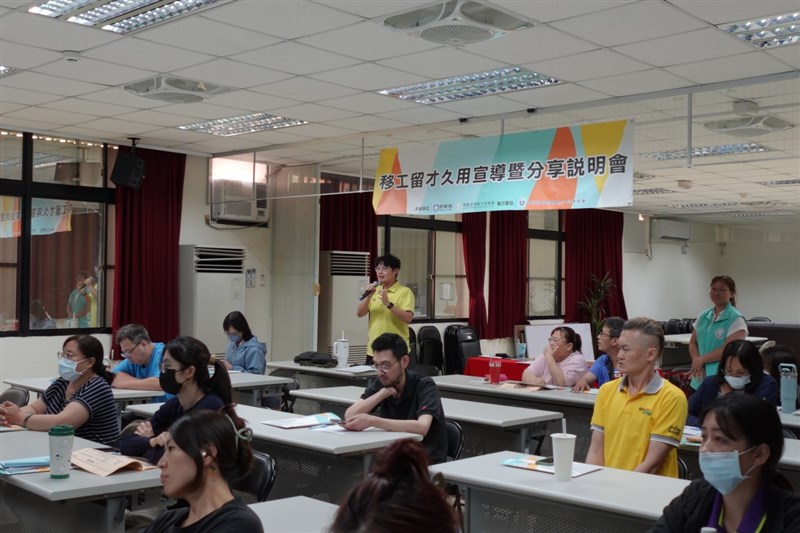
Shirley and Aya's aspirations reflect a broader challenge facing Taiwan as it seeks to address labor shortages.
Ministry of Labor (MOL) data showed there were around 895,000 migrant workers in Taiwan as of June 2026, including approximately 212,000 live-in family caregivers. The National Development Council has projected a shortage of 480,000 workers by 2030.
Although the retention program has been in place for less than five years -- meaning no foreign intermediate skilled workers have yet become eligible for permanent residency -- it has seen strong uptake.
By the end of June, the government had approved 80,379 applications for foreign intermediate skilled worker status, according to the Long-term Retention of Migrant Workers Service Center.
Lu Hsi-an (呂錫安), head of the Tainan Employment Service Institute Association, said employers are generally willing to help experienced migrant workers obtain the status because they want to retain reliable and well-trained employees.
Meeting the permanent residency requirement, however, is another matter, he said, noting that few workers would likely make the jump to nearly NT$60,000 a month.
"Employers cannot afford it," Lu said, adding that he had never heard of a manufacturing employer paying a migrant worker twice the minimum wage.
The threshold is even less attainable for live-in caregivers employed by individual households, leaving employers little incentive to support permanent residency applications, he said.
Growing support for reform
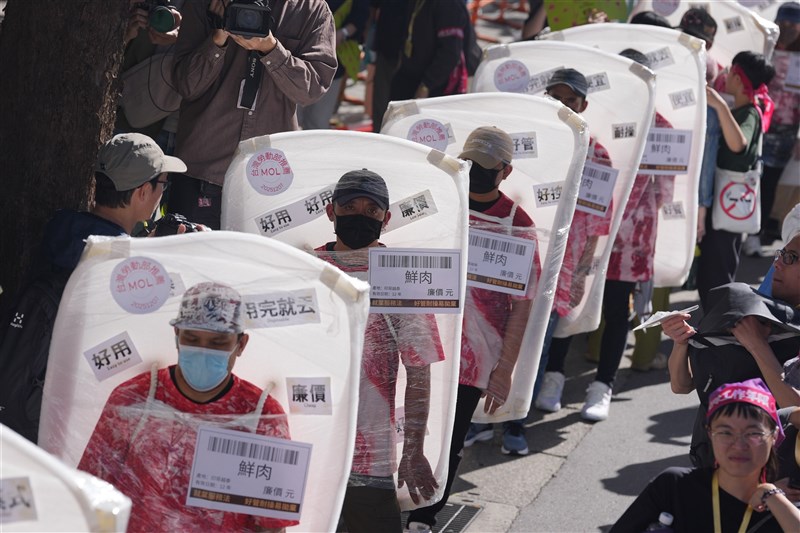
Hsin Ping-lung (辛炳隆), an adjunct associate professor at National Central University's Graduate Institute of Human Resource Management, said the current rules undermine the policy's goal of retaining labor and easing labor shortages.
Hsin said migrant workers initially showed little interest in permanent residency because it had never been a realistic option, but interest rose markedly within one or two years after the pathway was introduced, highlighting the need to revise the eligibility rules.
A study by MOL's Institute of Labor, Occupational Safety and Health similarly warned that requiring applicants to earn twice the minimum wage would make permanent residency increasingly difficult as the wage floor rises.
The institute recommended replacing the single income threshold with more flexible, industry-specific criteria.
The MOL told CNA that it is discussing with the Executive Yuan and the National Immigration Agency whether the requirements could be made more flexible.
The ministry said such changes could give skilled migrant workers who have contributed to Taiwan and integrated into society a more realistic chance of remaining permanently.
Enditem/ls
- Society
National Day celebrations kick off with parades, flyovers
10/10/2026 09:10 AM - Sports
Taiwan's Chen Yi-fan wins artistic skating gold at World Skate Games
10/09/2026 07:21 PM - Politics
Lai's National Day address to focus on Taiwan's economy, global role
10/09/2026 07:07 PM - Politics
Japanese lawmakers visit Taiwan for National Day celebrations
10/09/2026 07:02 PM - Culture
Czech, Taiwanese writers explore democracy, history at Frankfurt Book Fair
10/09/2026 07:00 PM