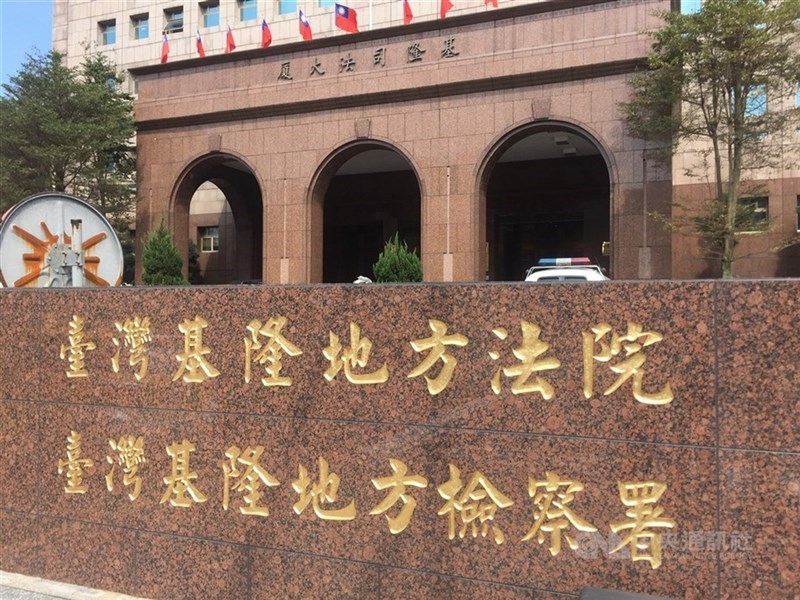
Taipei, Aug. 24 (CNA) The Keelung District Prosecutors' Office on Monday indicted several senior managers from Taiwan branches of international companies and Taiwanese firms for allegedly illegally selling Supermicro servers equipped with advanced Nvidia chips to buyers in China.
The defendants include a distribution manager surnamed Chang (張) at Nvidia Corp.'s Taiwan office; sales managers surnamed Lin (林) and Wang (王) at the Taiwan branch of Supermicro Computer Inc.; and Lu (呂), chief executive of Albatron Technology Co., one of Supermicro's distributors, according to a prosecutors' statement.
Also indicted were Tsai (蔡), a project manager at Chief Telecom, a data center service provider that rents out space for server storage; Yu (游), head of customs clearance service provider Chance See International Co., Ltd; and another man surnamed Wang (王), head of international trading company Long Wins Ltd.
The president of server sales company Flying Tiger Technology Co., Ltd., surnamed Chen (陳), was indicted, but the person in charge of the company, who is also surnamed Chen, remains wanted by the authorities and as of press time had not been indicted.
The men were all charged with breach of trust and forgery, prosecutors said.
According to prosecutors, sales, product flows, end users and end uses for Supermicro's advanced artificial intelligence servers equipped with Nvidia's B300 GPUs are strictly controlled by Supermicro and Nvidia because of their powerful computing capabilities.
Buyers must be on Nvidia's whitelist and provide documentation on end users and end uses for verification by the two companies, with resale prohibited.
For orders of more than eight servers, sales personnel and technicians from the two companies are also required to conduct site inspections and verify the intended use of the equipment, prosecutors said.
In February 2025, the two Chens from Flying Tiger Technology Co., allegedly sought to resell the advanced AI servers for profit having obtained a position on the whitelist for their company through undisclosed means.
They then secured a buyer and devised a plan to export the servers in July.
Knowing that Chief Telecom lacked sufficient electricity capacity and bandwidth to accommodate 130 servers, the defendants allegedly concealed that fact and had Chang ask Nvidia to approve the order, claiming that the required verification had been completed. This led Supermicro to agree to sell 130 servers to Flying Tiger, prosecutors said.
After Flying Tiger received two of the servers, Lu allegedly referred the company to a Chinese buyer after the original buyer was unable to pay for the purchase.
More transactions
In a second transaction involving 64 servers, the international trading company's Wang learned about the AI servers from Wang at Supermicro's Taiwan branch and contacted Lu to provide information on another Chinese buyer, prosecutors said.
Supermicro's Wang allegedly indicated to Lin that he knew about the illegal sale and agreed to share the proceeds with him.
The two Chens then allegedly provided a false statement to Supermicro's Taiwan branch to obtain delivery of the 64 servers.
The servers from the second transaction, along with the two servers from the first transaction, were delivered to Chinese buyers in three batches. Of those, 50 were shipped to China via Indonesia.
In a third transaction involving another 64 servers, eight were shipped to Japan and then Hong Kong for delivery to Chinese buyers. The remaining 56 were seized by the authorities in Taiwan.
Prosecutors said that Chen, the person in charge of Flying Tiger Technology Co., who is still at large, received illicit proceeds of more than US$21.2 million from the completed resale of 74 servers.
In a related case, a man surnamed Ho (何), head of Quintai Electronics Co., Ltd. and a friend of Lin, allegedly issued four false invoices to Lu to conceal the flow of illicit proceeds, resulting in the diversion of about NT$39.16 million in Albatron assets, prosecutors said.
Ho, Lin and Lu were separately charged with aggravated breach of trust under the Securities and Exchange Act.
Washington has restricted exports of certain advanced Nvidia chips to China since 2022, but such chips continue to surface in Chinese products.
- Society
Taiwan headline news
10/04/2026 01:08 PM - Politics
Taiwan's FM visit upgraded airport, cancer hospital project in Guatemala
10/04/2026 01:07 PM - Society
4 killed in fire at building materials store in Yilan
10/04/2026 10:20 AM - Society
Seasonal winds to bring cooler weather across parts of Taiwan
10/03/2026 07:26 PM - Politics
Local election campaigns heat up across Taiwan
10/03/2026 06:56 PM