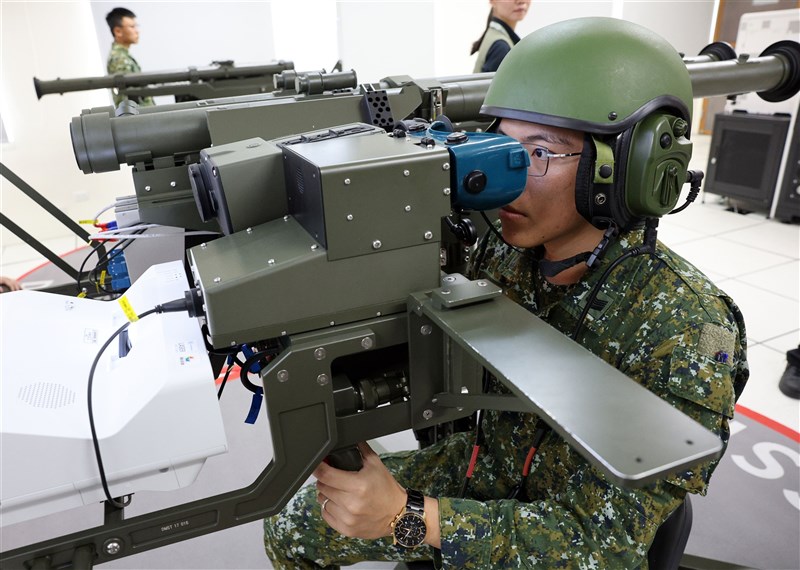
Tainan, Sept. 22 (CNA) Taiwan's Army unveiled simulators for United States-made Stinger missile systems Tuesday, highlighting their use in training personnel to engage airborne targets, including drones.
The Army Artillery Training Command demonstrated simulators for man-portable and dual-mounted Stinger (DMS) systems during an open house for local and foreign media.
Taiwan received "a few dozen" man-portable Stinger missile systems from former U.S. President Joe Biden's administration in 2023 under the U.S. Presidential Drawdown Authority, according to the Chinese-language Liberty Times.
The simulators for the man-portable Stinger missile systems were also included in the U.S. military assistance package, according to the command.
Army Maj. Bu Yi-wen (卜逸雯), an instructor for the man-portable Stinger systems, said physical strength and balance were key aspects of training because the system weighs nearly 16 kilograms.
Meanwhile, the DMS simulators are connected to a screen displaying a simulation of Jiupeng Bay in Pingtung County, where Jiupeng Military Base is located.
The simulators allow trainees to track and lock on to airborne targets, including drones, while communicating through built-in intercoms and sharing location information, according to the command.
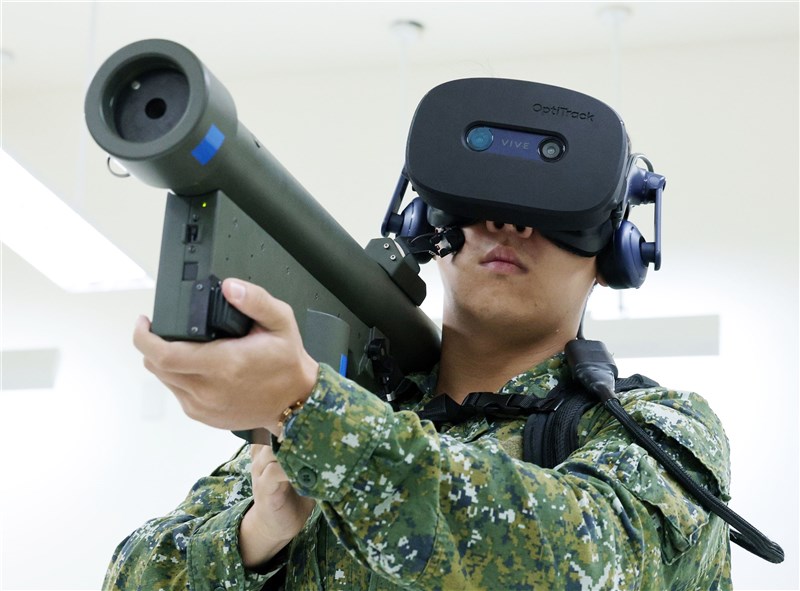
"The simulator systems can be configured based on different parameters to simulate different weather conditions, terrains or engagement targets, including drones," instructor Lt. Col. Chen Yu-wen (陳郁文) said.
Chen said trainees undergo 30-45 days of training to acquire the necessary skills, while those seeking to qualify as instructors undergo twice as much training.
He said quarterly and yearly refresher programs are also held, each lasting one to two months.
Simulator training helps keep training costs down, allows trainees to familiarize themselves with the systems, and prepares them for live-fire drills, such as the Shen Kung Exercise held in Jiupeng Bay in July, Chen said.
The U.S. approved the first batch of 250 man-portable Stinger missiles in 2015 and a second batch of the same size in 2019. Taiwan expects to receive them in phases beginning at the end of this year.
Taiwan later requested to purchase an additional 2,121 missiles but has yet to receive a letter of offer and acceptance from the U.S.
![Defense ministry releases images of jets escorting new F-16Vs]() Defense ministry releases images of jets escorting new F-16VsThe Ministry of National Defense on Saturday released footage and photos of an F-16V Block 20 and Brave Eagle advanced jet trainers escorting two F-16V Block 70s that Taiwan received a day earlier.10/03/2026 03:05 PM
Defense ministry releases images of jets escorting new F-16VsThe Ministry of National Defense on Saturday released footage and photos of an F-16V Block 20 and Brave Eagle advanced jet trainers escorting two F-16V Block 70s that Taiwan received a day earlier.10/03/2026 03:05 PM![Taiwan completes production of 66 Brave Eagle advanced jet trainers]() Taiwan completes production of 66 Brave Eagle advanced jet trainersTaiwan completed production of all 66 domestically developed Brave Eagle advanced jet trainers Thursday, with Aerospace Industrial Development Corp. (AIDC) Chairman Tsao Chin-pin (曹進平) personally piloting one of the final two aircraft to the Air Force Academy in Kaohsiung's Gangshan District.09/24/2026 03:18 PM
Taiwan completes production of 66 Brave Eagle advanced jet trainersTaiwan completed production of all 66 domestically developed Brave Eagle advanced jet trainers Thursday, with Aerospace Industrial Development Corp. (AIDC) Chairman Tsao Chin-pin (曹進平) personally piloting one of the final two aircraft to the Air Force Academy in Kaohsiung's Gangshan District.09/24/2026 03:18 PM![MQ-9B 'SkyGuardian' drones undergo flight testing in Taiwan: Source]() MQ-9B 'SkyGuardian' drones undergo flight testing in Taiwan: SourceThe first two of the four MQ-9B "SkyGuardian" drones Taiwan purchased from the United States underwent their first flight tests at an air base in eastern Taiwan early Monday, a source familiar with the matter told CNA.09/14/2026 12:47 PM
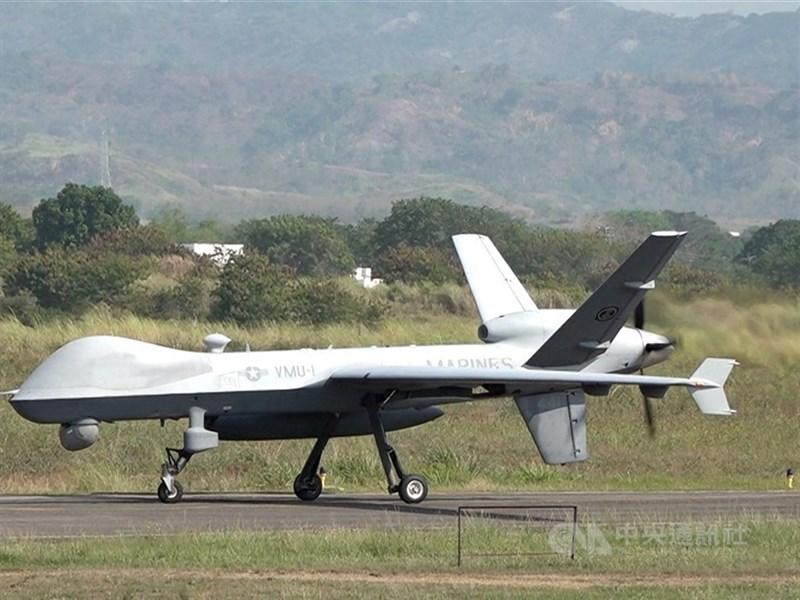
MQ-9B 'SkyGuardian' drones undergo flight testing in Taiwan: SourceThe first two of the four MQ-9B "SkyGuardian" drones Taiwan purchased from the United States underwent their first flight tests at an air base in eastern Taiwan early Monday, a source familiar with the matter told CNA.09/14/2026 12:47 PM
- Sports
Taiwanese men's, women's doubles pairs lose in BWF Arctic Open finals
10/12/2026 08:48 PM - Business
Nanya Technology expects DRAM prices, margins to rise in Q4
10/12/2026 08:47 PM - Politics
Kaohsiung mayoral candidates outline AI industry development plans
10/12/2026 08:24 PM - Society
Victim's nephew arrested in fatal Xinzhuang stabbing
10/12/2026 08:17 PM - Politics
Taiwan condemns China over sanctions on ministers of diplomatic allies
10/12/2026 07:44 PM