DEFENSE/MQ-9B 'SkyGuardian' drones undergo flight testing in Taiwan: Source
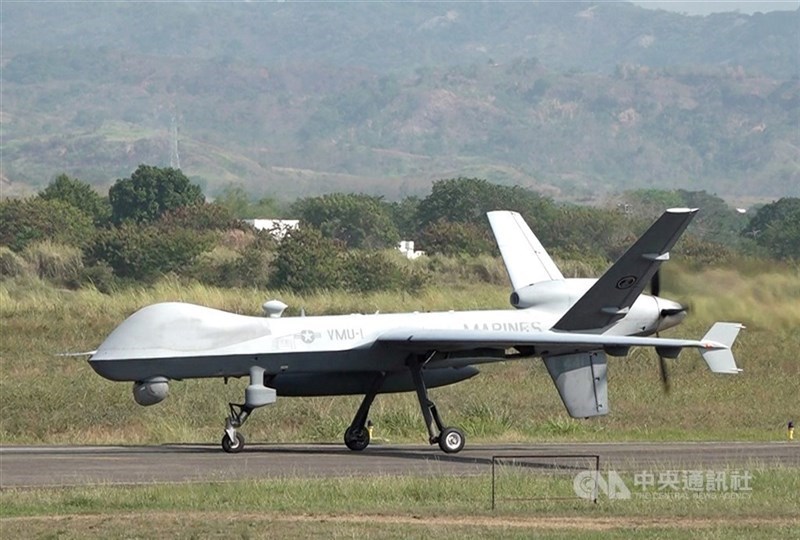
Taipei, Sept. 14 (CNA) The first two of the four MQ-9B "SkyGuardian" drones Taiwan purchased from the United States underwent their first flight tests at an air base in eastern Taiwan early Monday, a source familiar with the matter told CNA.
The unnamed source did not disclose further details about Monday morning's test flights, saying only that they were conducted at Hualien Air Base.
The source added that the tests were conducted after the military and the drone manufacturer completed the assembly of the two drones delivered to Taiwan earlier this year.
On March 17, Taiwan's Vice Defense Minister Hsu Szu-chien (徐斯儉) and Representative to the United States Alexander Yui (俞大㵢) attended a handover ceremony in the United States for two of the MQ-9Bs.
The United States has agreed to deliver the four MQ-9Bs to Taiwan in two batches in 2026 and 2027.
According to the U.S. Defense Security Cooperation Agency, the MQ-9Bs would provide Taiwan with "intelligence, surveillance and reconnaissance, target acquisition, and counter-land, counter-sea, and anti-submarine strike capabilities."
Su Tzu-yun (蘇紫雲), a research fellow at the government-funded Institute for National Defense and Security Research (INDSR), previously told CNA that the role of the MQ-9Bs in Taiwan is to enhance battlefield reconnaissance and surveillance capabilities rather than serve as a primary offensive weapon.
Hsieh Pei-shiue (謝沛學), another INDSR researcher, wrote in 2020, when the United States first approved the sale to Taiwan, that the drone is capable of linking to satellite communications networks shared among U.S. allies.
This means Taiwan and its U.S. counterparts could share battlefield intelligence instantly, providing opportunities for the two sides to cooperate during a conflict.
For instance, should a cross-strait conflict break out, Washington could take advantage of anti-ship missile systems deployed along the first island chain to prevent Chinese People's Liberation Army vessels from sailing into waters east of Taiwan to blockade the island, Hsieh said.
MQ-9Bs are capable of long-term, long-range surveillance, meaning the drones could fly near Chinese vessels and provide critical intelligence for U.S. forces to target them, Hsieh wrote at the time.
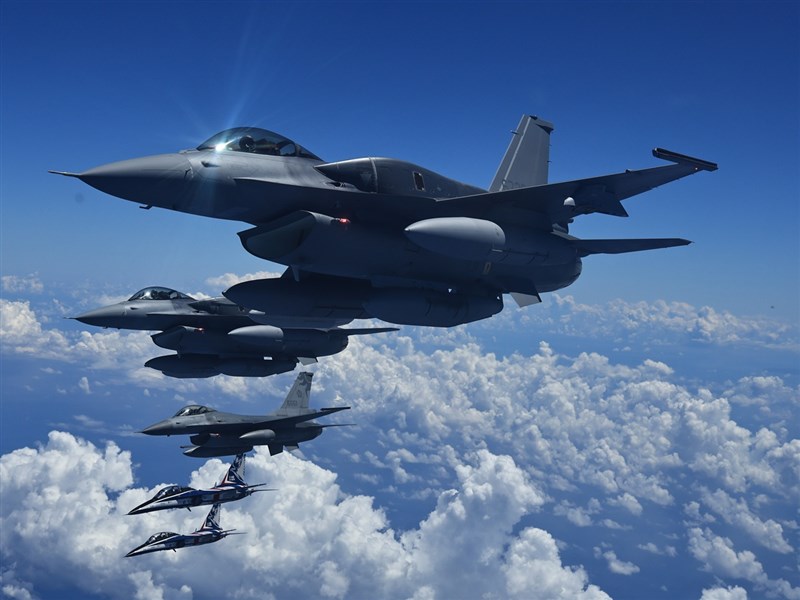
![Defense ministry releases images of jets escorting new F-16Vs]() Defense ministry releases images of jets escorting new F-16VsThe Ministry of National Defense on Saturday released footage and photos of an F-16V Block 20 and Brave Eagle advanced jet trainers escorting two F-16V Block 70s that Taiwan received a day earlier.10/03/2026 03:05 PM
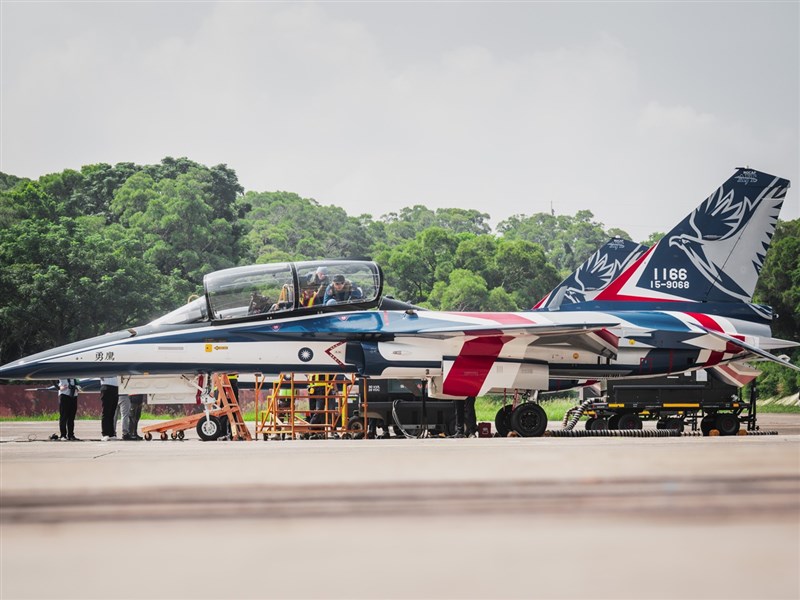
Defense ministry releases images of jets escorting new F-16VsThe Ministry of National Defense on Saturday released footage and photos of an F-16V Block 20 and Brave Eagle advanced jet trainers escorting two F-16V Block 70s that Taiwan received a day earlier.10/03/2026 03:05 PM![Taiwan completes production of 66 Brave Eagle advanced jet trainers]() Taiwan completes production of 66 Brave Eagle advanced jet trainersTaiwan completed production of all 66 domestically developed Brave Eagle advanced jet trainers Thursday, with Aerospace Industrial Development Corp. (AIDC) Chairman Tsao Chin-pin (曹進平) personally piloting one of the final two aircraft to the Air Force Academy in Kaohsiung's Gangshan District.09/24/2026 03:18 PM
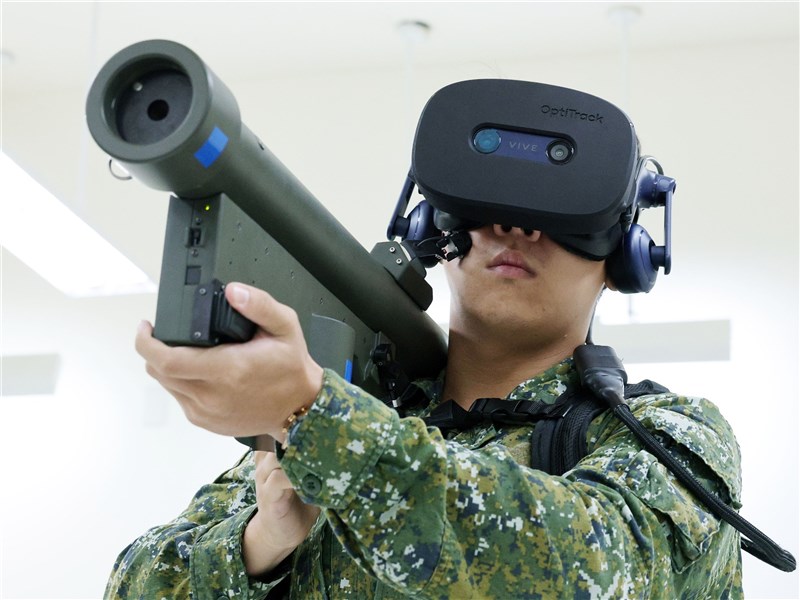
Taiwan completes production of 66 Brave Eagle advanced jet trainersTaiwan completed production of all 66 domestically developed Brave Eagle advanced jet trainers Thursday, with Aerospace Industrial Development Corp. (AIDC) Chairman Tsao Chin-pin (曹進平) personally piloting one of the final two aircraft to the Air Force Academy in Kaohsiung's Gangshan District.09/24/2026 03:18 PM![Army unveils Stinger simulators, highlights counter-drone role]() Army unveils Stinger simulators, highlights counter-drone roleTaiwan's Army unveiled simulators for United States-made Stinger missile systems Tuesday, highlighting their use in training personnel to engage airborne targets, including drones.09/22/2026 07:39 PM
Army unveils Stinger simulators, highlights counter-drone roleTaiwan's Army unveiled simulators for United States-made Stinger missile systems Tuesday, highlighting their use in training personnel to engage airborne targets, including drones.09/22/2026 07:39 PM
- Business
U.S. dollar closes lower on Taipei forex market
10/05/2026 04:17 PM - Politics
China pressured Munich institute to cancel Taiwan author event: Diplomat
10/05/2026 04:14 PM - Science & Tech
Metaverse healthcare can boost Taiwan's global competitiveness: Minister
10/05/2026 03:40 PM - Society
Green energy company, 25 indicted over alleged investment fraud
10/05/2026 03:37 PM - Business
Taiwan Lottery launches 2 new scratch cards with NT$2.11B prize pool
10/05/2026 03:07 PM