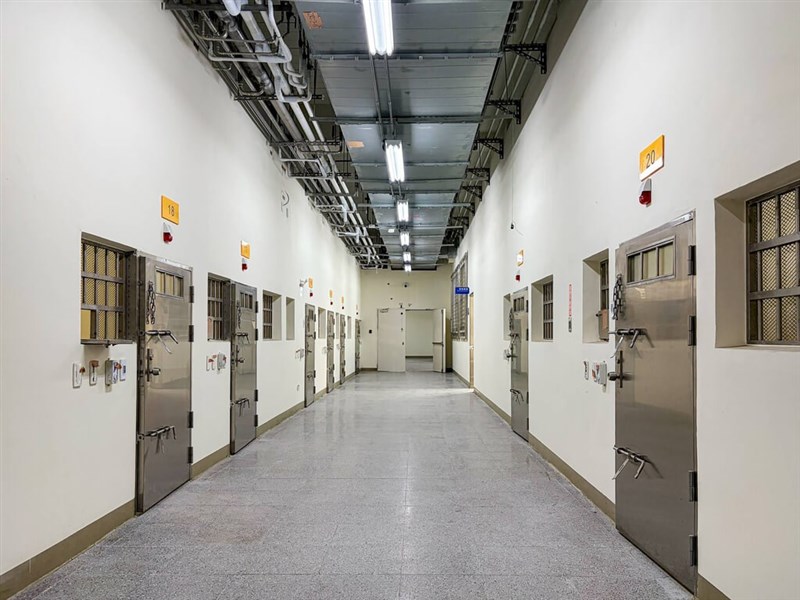
Taipei, Oct. 4 (CNA) The share of inmates serving sentences for drug-related offenses has fallen from 35.1 percent to 24.8 percent over the past five years, the Agency of Corrections said Sunday, crediting a policy of diverting eligible offenders into community-based addiction treatment rather than prison.
According to the agency, the government's third-phase New Generation Anti-Drug Strategy Action Plan, which runs from 2025 to 2028, emphasizes tiered diversion and diversified treatment.
Under the policy, people whose offenses involve only drug use and who primarily require addiction treatment are, where possible, offered deferred prosecution with court-ordered treatment in the community instead of imprisonment.
Those involved in violent crimes, serious offenses or other criminal activities are placed in correctional institutions, the agency said.
The agency said the approach reduces unnecessary incarceration, eases prison overcrowding and limits contact between drug users and drug traffickers while ensuring offenders receive treatment suited to their needs.
According to agency statistics, inmates imprisoned for drug use offenses accounted for 35.1 percent of Taiwan's prison population in 2022, with 17,428 such inmates among a total of 49,720 prisoners.

The share fell to 33.2 percent of 50,664 inmates in 2023, 31.7 percent of 52,825 in 2024 and 27.7 percent of 56,086 in 2025.
As of the end of June this year, 14,521 inmates were serving sentences for drug related offenses, representing 24.8 percent of the total prison population of 58,455.
The agency said inmates who enter correctional institutions after judicial screening generally have more complex addiction, criminal and psychosocial needs.
Therefore, the agency said, it is continuing to promote a science-based treatment model for drug offenders, while also working with the Ministry of Health and Welfare on a program to integrate and improve the quality of drug addiction treatment services in correctional facilities.
The agency also cited a Ministry of Justice study showing offenders who completed deferred-prosecution addiction treatment had a 66.3 percent lower risk of relapse than those who did not.
It said the findings support its policy of treating eligible offenders in the community while reserving imprisonment for more serious cases.
- Society
Gender groups urge investigation into 'discriminatory' gay bar raid
10/04/2026 07:48 PM - Society
Drug offenders as a share of Taiwan's prison population falls
10/04/2026 07:42 PM - Politics
- Society
3,000 take to the hills for Puli Power running event
10/04/2026 06:47 PM - Sports
Taiwan closes out 2026 Asian Games with fewest gold medals since 1990
10/04/2026 05:59 PM