DEFENSE/New report shows PLA prioritizing joint island-landing capabilities: Analyst
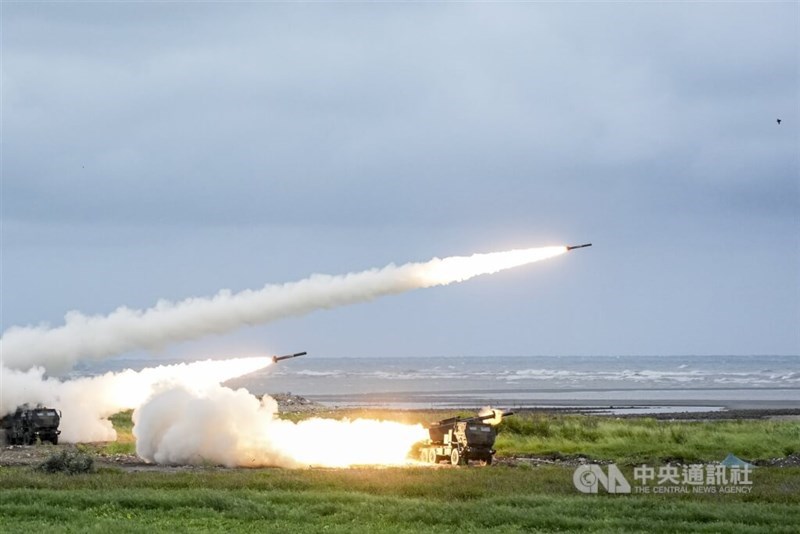
Taipei, Sept. 1 (CNA) The Ministry of National Defense's 2026 report on China's military power, submitted to the Legislative Yuan on Monday, places greater emphasis than last year's report on the People's Liberation Army's (PLA) efforts to strengthen its capabilities for a potential landing operation on Taiwan, according to an analyst.
Chieh Chung (揭仲), an adjunct associate research fellow at Taiwan's government-funded Institute for National Defense and Security Research (INDSR), said the report suggested that improving joint island-landing capabilities and completing military transformation had become the PLA's priorities for force development over the coming years.
"Those efforts do not appear to have been significantly affected by the gaps in the PLA's chain of command caused by [Chinese President] Xi Jinping's (習近平) large-scale purge of senior military officials," Chieh noted.
From sea to air
In the report's "weapons acquisition" section, the PLA Ground Force (PLAGF) is described as upgrading and modifying the Z-20 utility helicopter and developing unmanned transport helicopters, while the Air Force is replacing existing equipment with new airborne infantry fighting vehicles, transport vehicles and mortar carriers, Chieh said.
Meanwhile, the "military training" section says PLA Army Aviation helicopter units are conducting fuel and ammunition resupply operations using offshore platforms, he said.
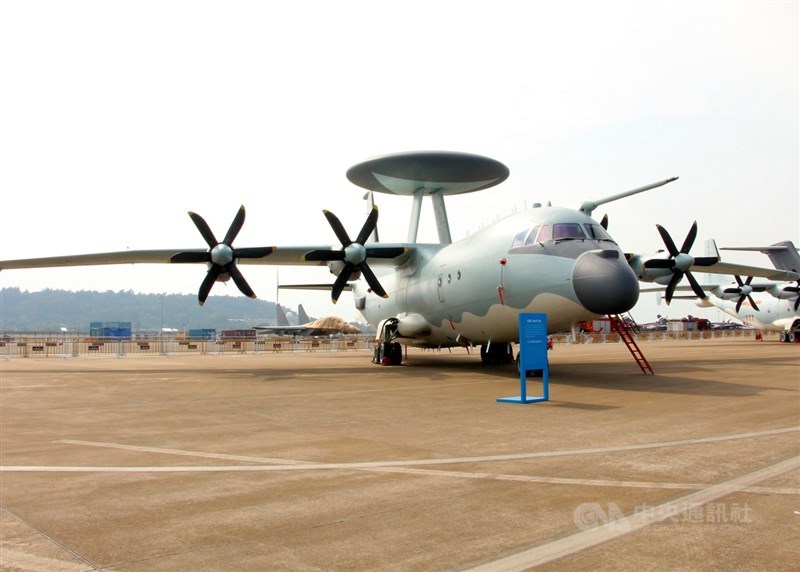
These developments are closely linked to the PLA's efforts in recent years to transform its joint island-landing capabilities, Chieh said.
Under the concept envisioned after the transformation, the first wave of attacking forces would consist primarily of troops transported by aircraft and helicopters into Taiwan's main island, allowing them to bypass Taiwan's coastal defenses, including drones, unmanned surface vessels and anti-ship missiles, he said.
Amphibious landings
The weapons acquisition section also says the PLA Navy will build the Type 076 amphibious assault ship and new types of amphibious landing barges, including self-elevating amphibious landing barges and "water-bridge" amphibious landing vessels, Chieh said.
The landing barges are designed to address major shortcomings in the PLA's existing "pierless unloading" equipment, including its inability to cross the Taiwan Strait and operate effectively under Taiwan's maritime conditions, he said.
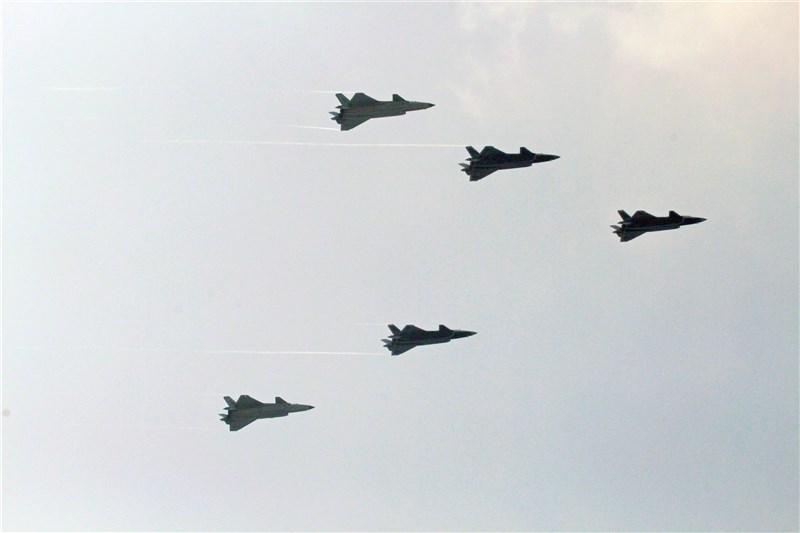
They would allow follow-on waves of troops and supplies to be rapidly brought ashore even if Taiwan's ports had been destroyed and rendered unusable, making the equipment critical to the PLA's efforts to improve its joint island-landing capabilities, Chieh said.
Cyber, electronic warfare
Beyond frontline combat units, the report contains new material on PLA efforts to enhance joint island-landing capabilities through military space, cyberspace, information support and logistics equipment, Chieh said.
For the first time, China's military space forces are said to be planning to deploy low-Earth orbit communications satellite constellations, including Guowang and Qianfan, and develop fourth-generation BeiDou navigation satellites to help prevent the PLA's communications and navigation from being disrupted by Taiwan or the U.S. after a landing, he said.
The cyberspace forces are also focusing on AI-based deepfake technology to strengthen hybrid warfare capabilities and deploying mobile electronic warfare and reconnaissance vehicles to bolster the offensive and defensive capabilities of PLA landing forces.
The branch also plans to acquire new network, space-ground networking and information-fusion equipment to enhance their mobile cyberwarfare capabilities, Chieh said.
Meanwhile, joint logistics and support forces are focusing on battlefield medical evacuation and treatment, as many casualties in a cross-strait operation would occur outside mainland China, either on Taiwan or in surrounding waters.
Preparations for the 2030s
Although the 2026 report provides a more detailed account of the PLA's measures to improve its joint island-landing capabilities, it also notes that the PLA's capabilities in conducting such operations remain inadequate at this stage.
Chieh said that while the ministry's assessment was consistent with the current situation, "the report as a whole nevertheless shows that the PLA is accelerating preparations for a potential armed invasion of Taiwan."
He estimated that the various programs could be completed in stages between 2030 and 2035.
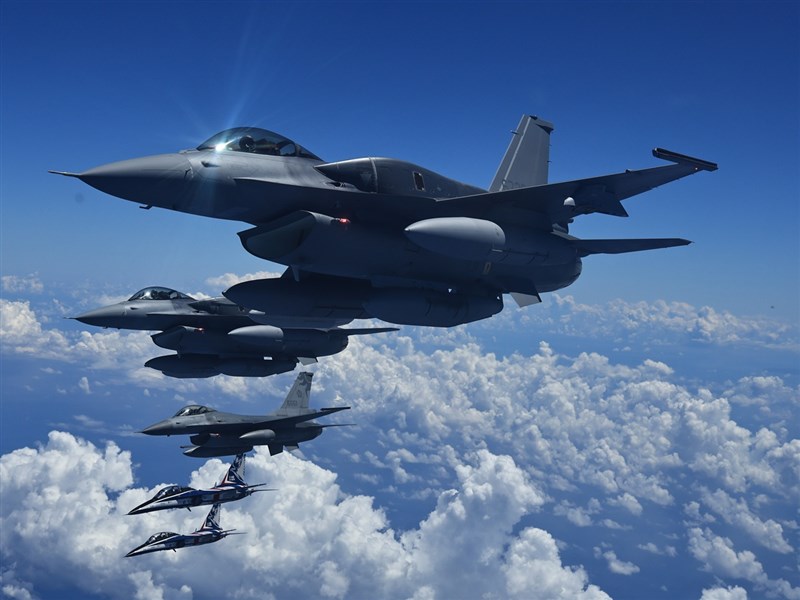
![Defense ministry releases images of jets escorting new F-16Vs]() Defense ministry releases images of jets escorting new F-16VsThe Ministry of National Defense on Saturday released footage and photos of an F-16V Block 20 and Brave Eagle advanced jet trainers escorting two F-16V Block 70s that Taiwan received a day earlier.10/03/2026 03:05 PM
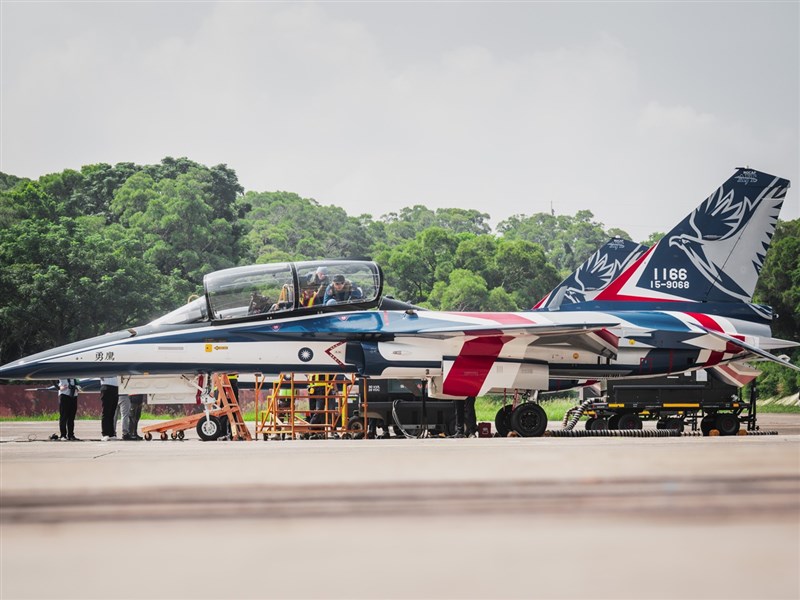
Defense ministry releases images of jets escorting new F-16VsThe Ministry of National Defense on Saturday released footage and photos of an F-16V Block 20 and Brave Eagle advanced jet trainers escorting two F-16V Block 70s that Taiwan received a day earlier.10/03/2026 03:05 PM![Taiwan completes production of 66 Brave Eagle advanced jet trainers]() Taiwan completes production of 66 Brave Eagle advanced jet trainersTaiwan completed production of all 66 domestically developed Brave Eagle advanced jet trainers Thursday, with Aerospace Industrial Development Corp. (AIDC) Chairman Tsao Chin-pin (曹進平) personally piloting one of the final two aircraft to the Air Force Academy in Kaohsiung's Gangshan District.09/24/2026 03:18 PM
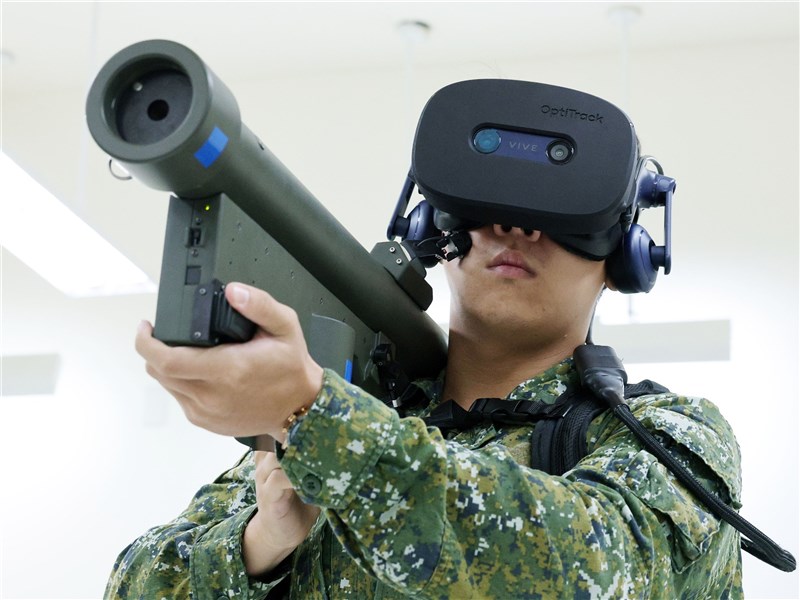
Taiwan completes production of 66 Brave Eagle advanced jet trainersTaiwan completed production of all 66 domestically developed Brave Eagle advanced jet trainers Thursday, with Aerospace Industrial Development Corp. (AIDC) Chairman Tsao Chin-pin (曹進平) personally piloting one of the final two aircraft to the Air Force Academy in Kaohsiung's Gangshan District.09/24/2026 03:18 PM![Army unveils Stinger simulators, highlights counter-drone role]() Army unveils Stinger simulators, highlights counter-drone roleTaiwan's Army unveiled simulators for United States-made Stinger missile systems Tuesday, highlighting their use in training personnel to engage airborne targets, including drones.09/22/2026 07:39 PM
Army unveils Stinger simulators, highlights counter-drone roleTaiwan's Army unveiled simulators for United States-made Stinger missile systems Tuesday, highlighting their use in training personnel to engage airborne targets, including drones.09/22/2026 07:39 PM
- Politics
Kaohsiung mayoral candidates outline AI industry development plans
10/12/2026 08:24 PM - Society
Victim's nephew arrested in fatal Xinzhuang stabbing
10/12/2026 08:17 PM - Politics
Taiwan condemns China over sanctions on ministers of diplomatic allies
10/12/2026 07:44 PM - Business
Taipower head wants power sector at the table in tech decisions
10/12/2026 07:33 PM - Sports
Lee Hao-yu's 'Pitbull' resolve drove record-setting rookie season
10/12/2026 07:32 PM