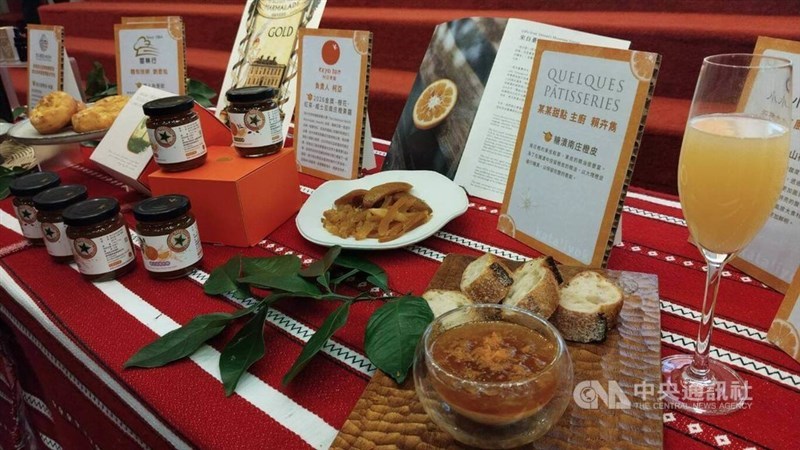
Taipei, Sept. 10 (CNA) Citrus taiwanica, a citrus species traditionally used by the Indigenous Saisiyat people, has received patent protection covering products derived from the plant and been licensed to a Saisiyat cooperative in Miaoli County, the Forestry and Nature Conservation Agency (FANCA) said Wednesday.
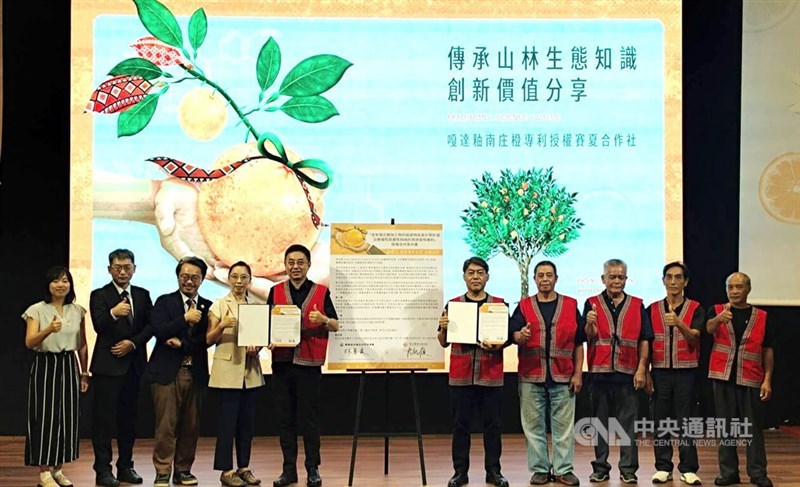
The patent covers applications of the plant and products derived from it, with authorization from the Saisiyat tribe required for their use, FANCA said.
The agency added that the case marks the first time a traditional Indigenous crop and products derived from it have received patent protection in Taiwan.
FANCA Director-General Lin Hwa-ching (林華慶) said the traditional knowledge underlying the use of the citrus came from the Saisiyat tribe and that technologies and products developed through modern research based on that knowledge should benefit its original holders.
Speaking at a press event, Lin said the license was not intended to monopolize the plant, but to protect and preserve the traditional knowledge of the Saisiyat people.
Ken Chih-you (根誌優), an elder of the Saisiyat Penglai Tribe whose tribal name is Tain a taeboeh Sawan kasames, said the fruit had traditionally been eaten by members of the tribe.
Known as "kata'iyok" in the Saisiyat language, meaning "food prepared by mother," the fruit was eaten as a snack by children and used in rituals and to treat ailments such as colds, he said.
However, land development and the plant's perceived lack of economic value caused its wild population to decline sharply.
The species is known in Mandarin as Nanzhuang orange (南庄橙), after its native habitat in Nanzhuang Township, Miaoli County, where it was once nearly extinct.
Citrus taiwanica was listed as critically endangered by the International Union for Conservation of Nature, and at one point fewer than five trees remained in Taiwan, according to FANCA.
FANCA subsequently launched a restoration project with the Saisiyat in Nanzhuang and began co-managing the forest with the tribe in 2018, Lin said.
The agency's Hsinchu branch has since continued collecting seeds and providing seedlings to the tribe, with more than 5,000 trees planted so far.
However, fewer than half have begun bearing fruit consistently, Lin said.
As the trees typically begin bearing fruit five to six years after planting, yields are expected to increase toward the end of this year, he added.
FANCA has also developed food products using the fruit, including marmalade and spices, as well as chocolate and cookies incorporating the rind and fruit. The products have received positive responses from the tribe, Lin said.
After learning that the Saisiyat traditionally dried the citrus and ground it into powder to treat colds, FANCA commissioned National Taiwan University horticulture associate professor Lin Shu-yen (林書妍) to conduct further research.
The research team found that extracts from the fruit could significantly reduce pneumonia severity indices in animals, suggesting potential applications in the medical and health fields, Lin said.
Lin said he hoped the citrus would become an important green industry for the tribe.
He added that the patent license, an example of "access and benefit sharing" under the Biodiversity Act, could serve as a model for protecting and promoting other Indigenous crops.
- Culture
Citrus taiwanica becomes Taiwan's first patent-protected Indigenous crop
09/10/2026 03:10 PM - Culture
Taiwan to launch International Comics Festival: Culture Minister Li
09/10/2026 02:33 PM - Business
Taiwan shares close down 0.51%
09/10/2026 02:08 PM - Science & Tech
Taiwan showcases scope of tech capabilities at chip forum in Europe
09/10/2026 01:29 PM - Society
Taiwan headline news
09/10/2026 12:11 PM