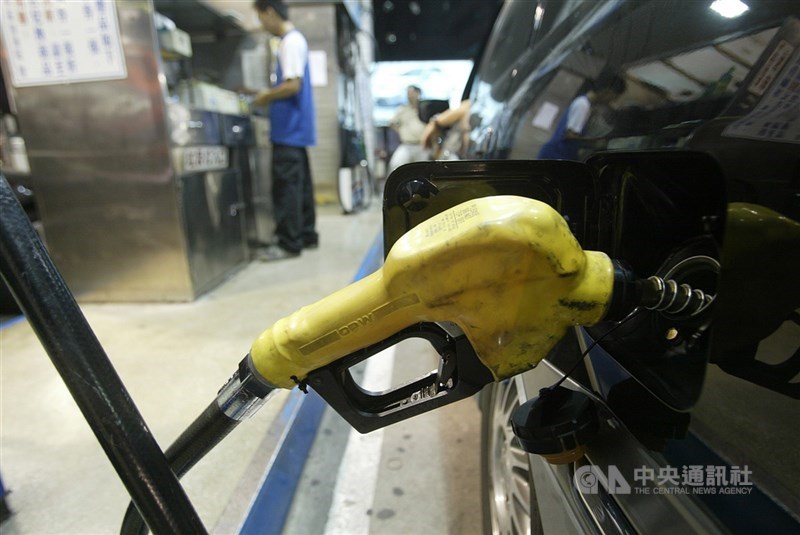
Taipei, Aug. 28 (CNA) Taiwan should create a market for low-carbon fuels through mandates and time-limited incentives to encourage companies to invest in domestic production, an economic researcher said Friday.
Chen Jong-shun (陳中舜), an associate research fellow at the Green Economy Center of the Chung-Hua Institution for Economic Research (CIER), said the fundamental obstacle in building such markets was not a lack of feedstock, demand or technology.
"The market simply does not exist," Chen said at the 2026 Taiwan New Energy Development Forum, organized by Taiwan's state-run oil company CPC Corp., Taiwan, in Taipei.
Among the fuels Chen had in mind were sustainable aviation fuel (SAF), biodiesel and bioethanol/E10 for road vehicles, and low-carbon alternatives to marine fuel oil for vessels in the short term, and hydrogen-based synthetic fuels as a longer-term option.
When a market does not exist or remains underdeveloped, the government should provide a safety net that allows the first company to enter it, survive and turn a profit, he said, invoking the economic concept of the "first penguin."
Once the first entrant demonstrates that the business can be profitable, others will follow, according to Chen.
The subsidies should include sunset clauses that encourage other potential participants to enter before support expires while preventing inefficient government spending from continuing indefinitely, he said.
In his presentation at the forum, the main example cited by Chen was SAF. A commercially viable domestic plant would need annual production capacity of around 100,000 to 150,000 metric tons of SAF, he said.
At the same time, work on the demand side was also necessary, Chen said, though he seemed to favor mandates to get companies and individuals to purchase low-carbon fuels.
In the SAF market, for example, Chen suggested that Taiwan would need to mandate that aviation fuel contain 3 percent to 5 percent SAF to generate sufficient demand for a production facility, he said.
"If that range cannot be set, no company will produce it, because it would not be economically viable," Chen said.
Technology companies, which are generally eager to find low-carbon processes to meet carbon emissions commitments, could also purchase or support SAF to mitigate Scope 3 emissions generated by business travel and air freight, Chen said.
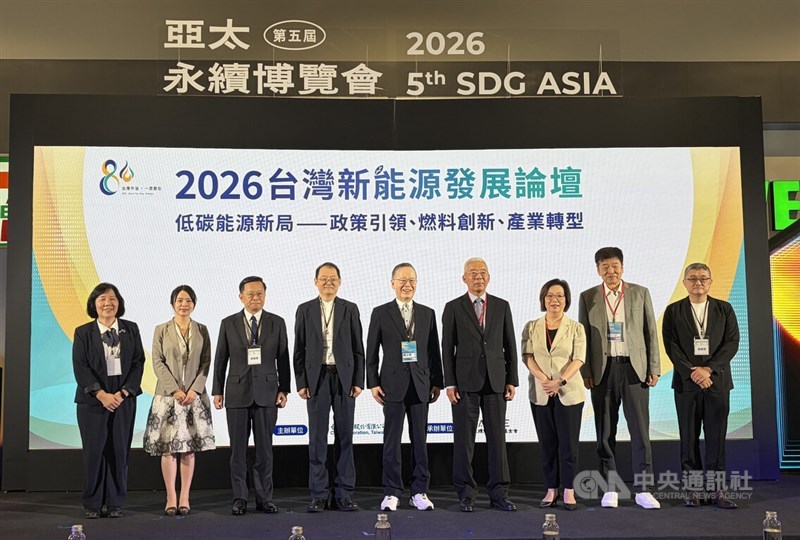
Also at the forum, Energy Administration Director-General Wu Chih-wei (吳志偉) discussed the importance of CPC Corp., Taiwan, in the country's overall approach to dealing with emissions.
Wu said Taiwan's energy transition combines expanded renewable generation and natural gas as a bridge fuel with energy conservation, storage, load management and improvements to the power grid.
CPC will have an important role during that transition because of its involvement in natural gas procurement and supply, as well as its geological exploration and chemical engineering capabilities, which could support the development of geothermal energy, hydrogen, biofuels and carbon storage, Wu said.
While agreeing that CPC needed to transform its operations, Wu said Taiwan should not adopt a "national team" approach for every energy initiative and should instead consider individual companies' comparative advantages.
"Some things cannot be accomplished by a national team," he said. "You have to consider the comparative advantages of individual companies."
- Business
Taiwan shares close up 0.59%
10/14/2026 01:46 PM - Business
CPC to invest up to US$4.4 billion in Alaska LNG project
10/14/2026 01:39 PM - Politics
Ex-U.S. national intelligence director praises Han Kuang reforms
10/14/2026 01:27 PM - Politics
Emissions cuts key to Taiwan's future business orders: President
10/14/2026 01:17 PM - Sports
WBC outfielder Stuart Fairchild to visit Taiwan in November
10/14/2026 12:15 PM