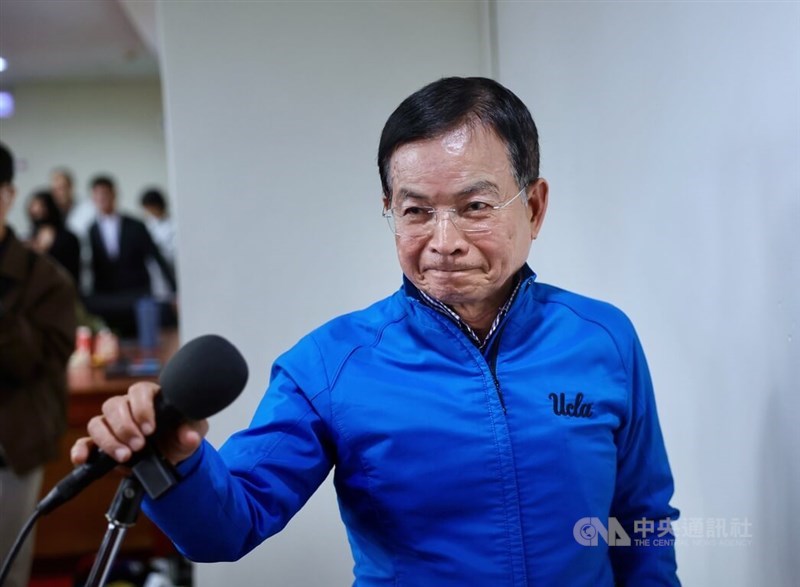
Taipei, Oct. 7 (CNA) A lawmaker from the main opposition Kuomintang (KMT) on Wednesday said he plans to introduce legislation to impose tougher penalties for driving under the influence of narcotics, including the possibility of the death penalty for repeat offenders who cause a fatality.
Speaking at a news conference, Legislator Lai Shyh-bao (賴士葆) said the number of drug-impaired driving deaths in Taiwan had risen steadily, from 11 in 2024 to 30 in the first seven months of 2026.
From 2023 to 2025, the number of drug-related cases in the legal system rose by 64 percent, with a 113 percent increase in marijuana cases and a 128 percent rise in new psychoactive substance cases, Lai said.
To combat these trends, Lai said he was planning to introduce legislation to strengthen drug laws in several areas, starting with treating drug-impaired driving as a separate offense from drunk driving.
For basic drug-impaired driving cases with no accident, offenders would receive a one-to-five-year prison sentence with a maximum fine of NT$500,000 (US$15,686), Lai said.
Currently, basic drug impaired driving is punishable by up to three years in prison and a maximum fine of NT$300,000, with no statutory minimum prison sentence.
Meanwhile, drugged drivers who cause a fatality should have their vehicle confiscated, while repeat drugged drivers who cause a death should be eligible for the death penalty, and not merely life imprisonment, as proposed by the Cabinet, Lai said.
The planned legislation would also require people who receive suspended sentences for drug-impaired driving to enter a rehab program and undergo regular drug testing, according to Lai.
In terms of regulation, Lai said he would codify the use of saliva-based rapid tests for drugs -- which the Cabinet also proposed in June -- and allow them to be used as an anti-drug tool in schools.
Lai said he would also mandate that any move to reclassify marijuana, a Category 2 narcotic, as a less serious Category 3 drug, would have to be approved by the Legislative Yuan, and not just done by executive order.
Lai's proposals Wednesday came amid a controversy over drug policy that has roiled the Taipei mayoral race, with less than two months left before Taiwan's Nov. 28 local elections.
- Politics
KMT lawmaker to propose tougher penalties for drug-impaired driving
10/07/2026 05:29 PM - Business
TSMC supplier Gudeng launches operations at Arizona plant
10/07/2026 05:21 PM - Business
Taiex edges lower ahead of 50,000-point mark
10/07/2026 05:15 PM - Society
Student indicted over false alarm that halted high-speed rail trains
10/07/2026 04:37 PM - Politics
18-month jail sentence sought over surveillance of DPP's Shen
10/07/2026 04:31 PM