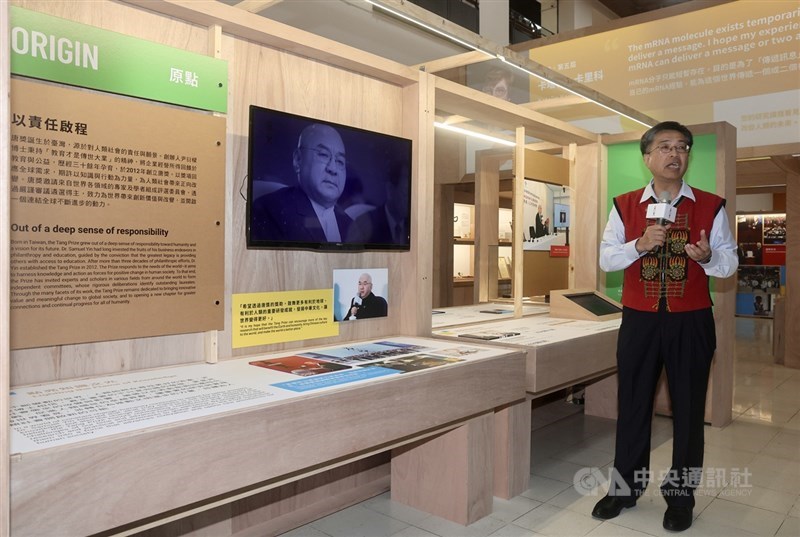
Taipei, Sept. 3 (CNA) The 2026 Tang Prize Exhibition opened Thursday, featuring the optical instrument used by Sustainable Development laureate Susan Solomon nearly 40 years ago in Antarctica to help prove that chlorofluorocarbons (CFCs) were the primary cause of the expanding ozone hole.
The exhibition at the National Chiang Kai-shek Memorial Hall marks the start of this year's Tang Prize Week, with six 2026 laureates scheduled to visit Taiwan later this month for the award ceremony, public lectures and exchanges with students, according to a statement released by the Tang Prize Foundation.
Tang Prize Foundation CEO Chern Jenn-chuan (陳振川) said highlights of Tang Prize Week include the Sept. 18 award ceremony, laureate lectures on Sept. 19, and a series of master's forums and youth symposiums at universities and high schools across Taiwan.
The exhibition, which runs for two months with free admission, also debuts a digital "Tang Prize Knowledge Hub," bringing together the contributions of laureates from the prize's first seven editions. Visitors can also leave messages through an interactive digital co-creation wall.
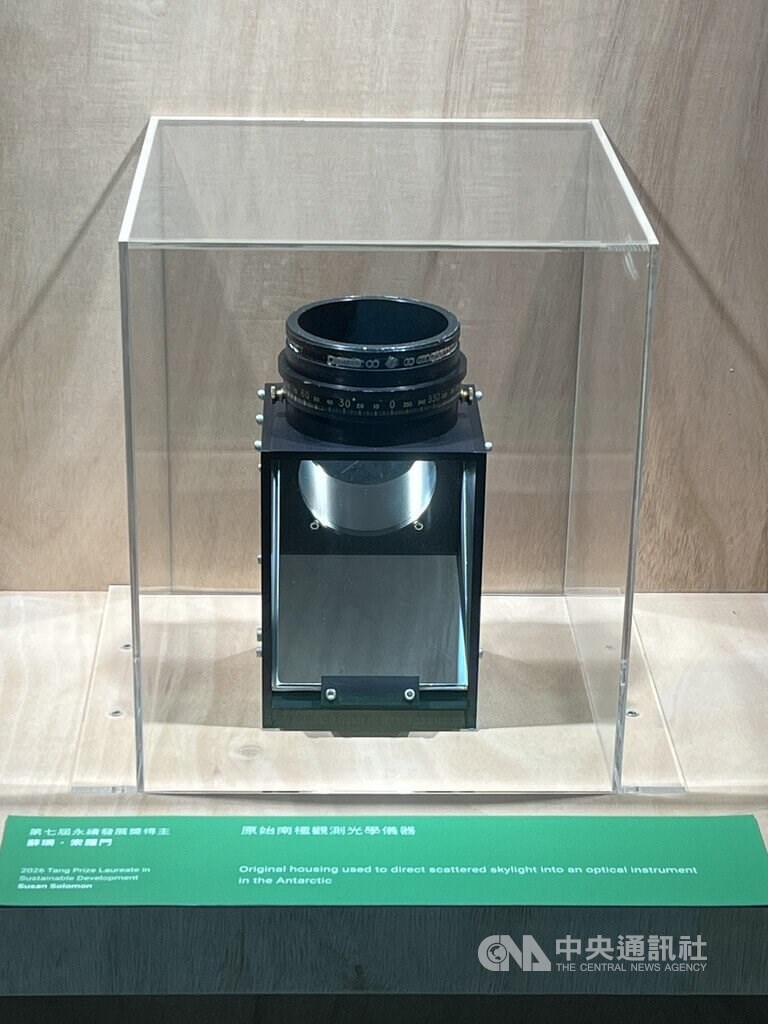
A centerpiece of the exhibition is the optical instrument Solomon used during an Antarctic expedition in the 1980s to test her hypothesis that chemical reactions involving CFCs were driving ozone depletion.
The instrument measured wavelengths of moonlight and scattered sunlight, allowing researchers to determine the concentration of atmospheric gases and provide key evidence linking CFCs to the ozone hole.
According to the foundation, the instrument's original mirror was damaged during the Antarctic expedition. Solomon had a replacement specially made for the exhibition so it could be displayed in Taipei, hoping it would inspire visitors to reflect on climate change.
Another featured exhibit is handwritten lecture notes by Sinology laureate Ge Zhaoguang (葛兆光) for his work on Chinese intellectual history.
Filled with revisions and attached slips of paper, the notes illustrate Ge's habit of developing a complete argument on a single page. Since he later switched to digital manuscripts, the more than 30-year-old handwritten notes have become especially valuable.
To preserve the fragile originals, the exhibition displays high-quality reproductions.
- Politics
Taiwan's parties ramp up campaigning ahead of Nov. 28 local elections
10/14/2026 09:21 PM - Politics
Belize PM vows stronger support for Taiwan after China sanctions
10/14/2026 09:07 PM - Business
Musk's Terafab plan poses no short-term threat to TSMC: Analyst
10/14/2026 08:22 PM - Society
Northern Taiwan to see showers Thursday as day-night temperature gap widens
10/14/2026 08:15 PM - Politics