Taiwan tech sector should shift to 'made with Taiwan' model: Industry leaders
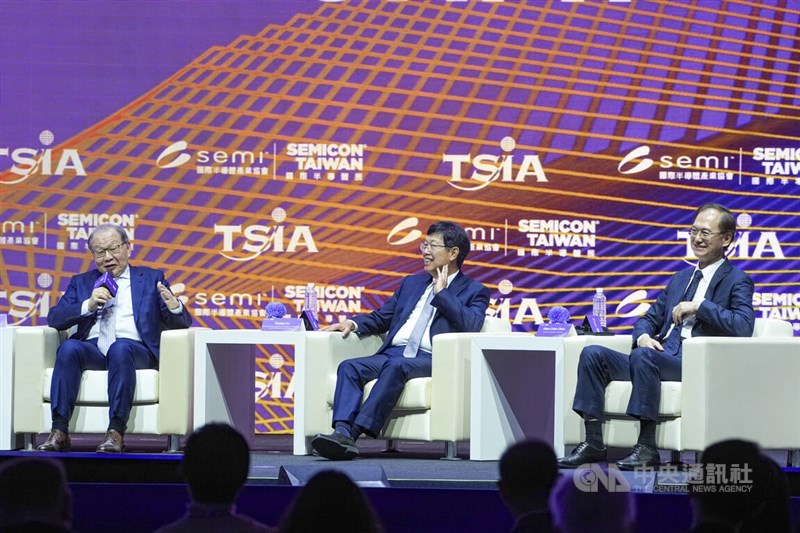
Taipei, Sept. 2 (CNA) Taiwan's technology sector should shift from concentrating production at home to a "made with Taiwan" model as surging artificial intelligence demand and geopolitical pressures reshape global supply chains, industry leaders said Wednesday.
Foxconn Chairman Young Liu (劉揚偉) said customers increasingly want production distributed across countries to reduce risks, while governments want more of the products they consume to be manufactured domestically.
Taiwanese companies are therefore expanding abroad to meet both customer demand and host countries' localization needs, Liu said during a discussion at SEMICON Taiwan 2026 in Taipei.
"We all have to think about how to make with Taiwan, not in Taiwan," he said.
Liu said Taiwan's culture, education system and stable government policies have made it particularly capable of delivering both quality and speed. Taiwanese companies could apply those strengths while moving some production to countries where their products are used, he added.
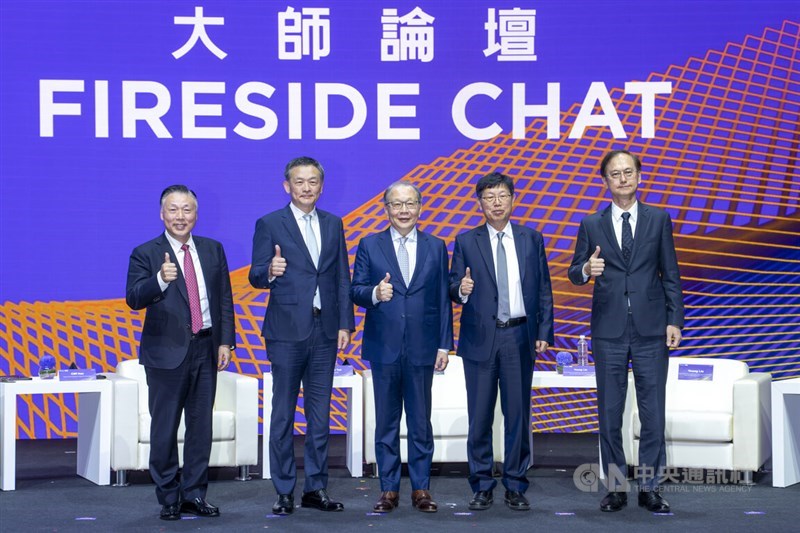
The shift is becoming increasingly necessary because AI-related demand is growing faster than Taiwan's semiconductor supply chain can expand, said TSMC Senior Vice President and Deputy Co-Chief Operating Officer Cliff Hou (侯永清).
Hou said TSMC's forecast at the end of last year for the amount of equipment it would need to purchase this year was used as a baseline. The estimate rose to 1.5 times that level after the first quarter and reached 1.9 times by July, nearly doubling within six months.
TSMC is simultaneously advancing construction of 13 fabs in Taiwan and another five or six overseas, compared with four or five in the past, but still cannot meet demand, he said.
Meanwhile, rising requirements for computing power, energy efficiency, advanced technologies, packaging and system performance mean companies must collaborate more closely across different stages of production, Hou added.
MediaTek CEO Rick Tsai (蔡力行) said Taiwan's advantage lies in its combination of technological capability, flexibility and speed, which has enabled its companies to support customers through successive waves of innovation, from personal computers and mobile phones to AI.
Taiwan's supply chain is already "a global Taiwan" rather than a purely domestic operation, Tsai said, adding that local companies could continue expanding internationally and work with overseas partners in areas where they lack capabilities.
Unimicron Technology Corp. Chairman Shan-Chieh Chien (簡山傑) said AI demand has intensified a shortage of semiconductor substrates while creating requirements for larger and more complex designs.
The industry depends on suppliers of critical tools and materials, many of them small and medium-sized Japanese companies facing their own capacity pressures, Chien said.
ASE Inc. CEO Tien Wu (吳田玉), who moderated the discussion, cited that dependence in advocating for cooperation throughout the semiconductor ecosystem.
"Again and again, collaborate because we cannot do this alone," Wu said. "Our dependency goes beyond comprehension."
- Politics
Taiwan's parties ramp up campaigning ahead of Nov. 28 local elections
10/14/2026 09:21 PM - Politics
Belize PM vows stronger support for Taiwan after China sanctions
10/14/2026 09:07 PM - Business
Musk's Terafab plan poses no short-term threat to TSMC: Analyst
10/14/2026 08:22 PM - Society
Northern Taiwan to see showers Thursday as day-night temperature gap widens
10/14/2026 08:15 PM - Politics