EXCLUSIVE INTERVIEW/Microsoft working on making Taiwan Azure region widely available: Executive
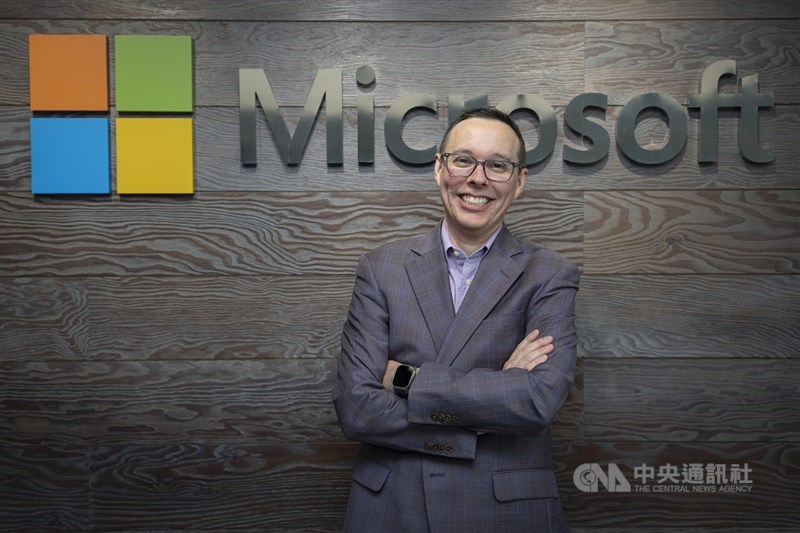
Taipei, Sept. 1 (CNA) Microsoft's Azure cloud region in Taiwan is already operating and serving selected customers, and the company is working toward making it generally available as its local infrastructure continues to expand, a senior executive at the tech giant said on Tuesday.
Azure is Microsoft's cloud computing platform, which provides businesses and organizations with computing power, data storage, artificial intelligence (AI) tools and other services over the internet, without requiring them to build and operate their own computing infrastructure.
Its services run on Microsoft's global network of physical datacenters containing servers, chips and networking equipment, grouped geographically into more than 80 Azure "regions" worldwide.
Alistair Speirs, general manager of Azure Global Infrastructure, told CNA in an exclusive interview at the company's Taipei office that Taiwan North, Microsoft's only Azure cloud region in Taiwan, is still being rolled out in stages.
"We have the data center region operational now. We have our own services running in there, as well as some of our early customers," Speirs said.
Speirs said Taiwan North "may not yet have the full capabilities of what you may see in our Singapore or Malaysia or Japan data center regions yet, but it will get there over time as it grows."
He explained that Taiwan North has not yet reached general availability and that Microsoft is still selectively onboarding customers rather than opening the region broadly to all customers.
Asked when Taiwan North would reach general availability, Speirs did not provide a timetable, saying Microsoft "will share more information as it becomes available."
Growing footprint in Taiwan
Microsoft established its Taiwan subsidiary in 1989 and announced plans in 2020 to build its first cloud datacenter region in the country. The company said in June 2025 that the local infrastructure had begun operating in 2024, without disclosing its exact location in northern Taiwan.
It said at the time that Azure services available locally had grown from around 70 to more than 200, while more than 100 Taiwanese businesses and organizations were using the infrastructure.
Speirs did not provide an updated customer figure on Tuesday, but said Taiwan North has customers across sectors, including financial services, manufacturing and healthcare.
He described Taiwan North as one of Microsoft's newest cloud regions and said the company would continue expanding it as "the investment matures."
On concerns that data belonging to Taiwanese customers could be transferred to cloud infrastructure in China without their direction, Speirs said Azure services come with "data residency commitments."
For core services such as databases, storage and virtual machines, data "is only going where you as the administrator say that data will go," he said.
Customers can also configure controls governing where data is stored and protected, although some services, including networking functions, are inherently global, Speirs said.
Building for the 'worst day'
Building cloud infrastructure requires Microsoft to look much further ahead than a typical technology product cycle.
Speirs described a datacenter as a commitment to a market lasting 20 or 30 years, making electricity supply a key consideration in deciding where and how much capacity to build.
"We can only turn on as many services as we can get power for," he said.
Microsoft typically enters long-term power purchasing agreements with local utility providers and seeks renewable energy as part of those arrangements, according to Speirs.

On whether Taiwan -- which relies heavily on imported energy and has faced concerns over power supply -- could provide sufficient electricity for Microsoft's datacenter operations, Speirs was unequivocal: "Absolutely."
Speirs did not elaborate on whether the Taiwan government had made any specific commitments regarding power supply, while Microsoft did not immediately provide further details in response to a follow-up query from CNA.
Taiwan's exposure to earthquakes, typhoons and potential disruptions arising from cross-Taiwan Strait tensions also figures into Microsoft's planning.
Speirs said Microsoft's more than 500 datacenters worldwide -- including infrastructure in earthquake-prone Japan and conflict-affected Israel -- have to be built "for their worst day, not just their best day."
For Taiwan, he cited backup power, uninterruptible power supply systems, diverse network routes and multiple network paths connecting local infrastructure with Microsoft's wider global network.
He said Microsoft had seen the value of such resilience during disruptions in Ukraine and the Middle East, as well as extreme weather events, when cloud infrastructure helped customers keep critical business or government systems running.
For particularly critical systems, Speirs pointed to Azure Local, which allows Azure services to run on hardware at a customer's own premises and even continue operating after being disconnected from the public cloud.
He described such a configuration as a possible "bunker scenario" until connectivity can be restored.
'No Maia 200 without Taiwan'
Taiwan's role in Microsoft's cloud business extends beyond hosting the company's infrastructure.
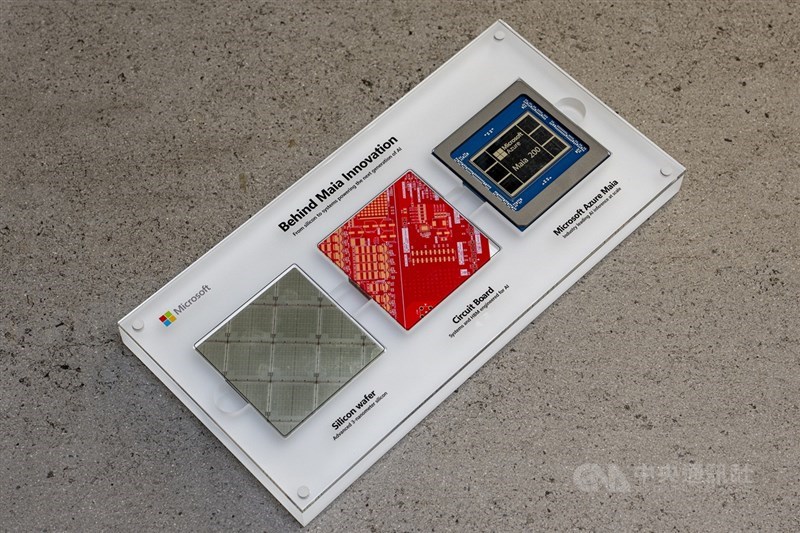
During the interview, Speirs took out samples of a silicon wafer, circuit board and Microsoft's Maia 200 AI accelerator -- hardware he carries in his suitcase while traveling around the world to show customers how Microsoft's computing systems are built.
Introduced earlier this year, Maia 200 is Microsoft's second-generation custom AI accelerator, which the company says delivers 30 percent better performance per dollar than the latest-generation hardware in its fleet.
Manufactured using Taiwan Semiconductor Manufacturing Co.'s (TSMC) 3-nanometer process, Maia 200 is designed primarily for AI inference -- the process in which a trained AI model generates responses or performs tasks for users.
"Without Taiwan, there would be no Maia 200," Speirs said.
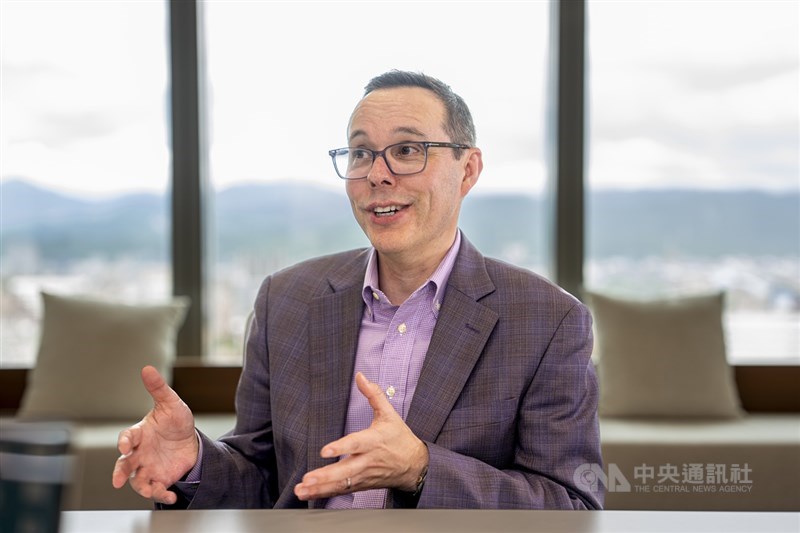
Microsoft's Taiwan-based engineers help design and optimize such systems and work with local suppliers, with cooperation extending from chips, substrates and memory to cooling, power requirements, and the way processors are fitted into datacenter racks, Speirs said.
Such integration, he added, means modern AI infrastructure requires more than a traditional supply chain, involving "deep collaboration, deep partnerships and deep co-design" across hardware and software, with Taiwan playing a critical role throughout the ecosystem, Speirs said.
He also called Taiwan one of the world's most sophisticated and highly skilled markets for cloud and AI technologies, joking that the average person in Taiwan knows the difference between a CPU and a GPU -- knowledge he said could not necessarily be expected "even in the streets of Silicon Valley."
Making his first visit to the country mainly for SEMICON Taiwan, Speirs summed up the semiconductor powerhouse's role in Microsoft's global infrastructure and "silicon-to-systems" strategy.
"There's a little bit of Taiwan in every data center at Microsoft around the world," he said.
- Sports
Taiwanese men's, women's doubles pairs lose in BWF Arctic Open finals
10/12/2026 08:48 PM - Business
Nanya Technology expects DRAM prices, margins to rise in Q4
10/12/2026 08:47 PM - Politics
Kaohsiung mayoral candidates outline AI industry development plans
10/12/2026 08:24 PM - Society
Victim's nephew arrested in fatal Xinzhuang stabbing
10/12/2026 08:17 PM - Politics
Taiwan condemns China over sanctions on ministers of diplomatic allies
10/12/2026 07:44 PM