With GDP per capita up, Taiwan needs balanced income distribution: Economist
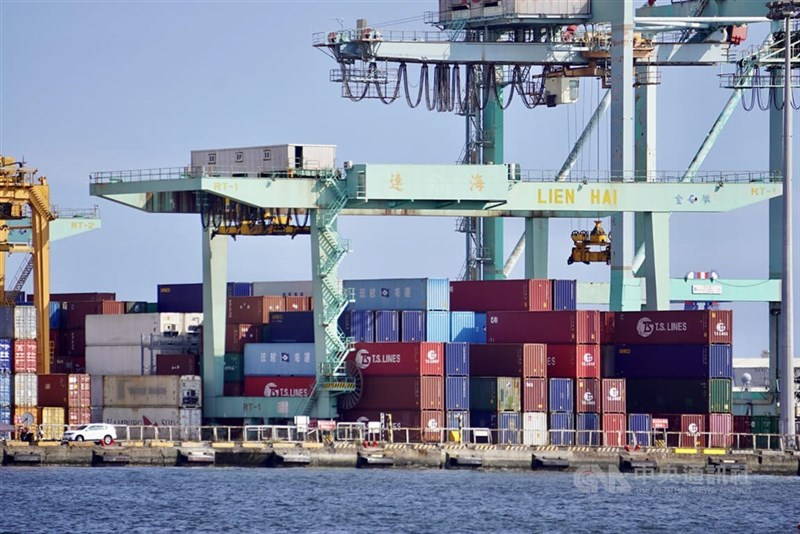
Taipei, Aug. 22 (CNA) With Taiwan's gross domestic product (GDP) per capita forecast to approach US$50,000 in 2027 amid the artificial intelligence (AI) boom, how to ensure a more balanced distribution of income generated by the AI-driven economy is becoming a concern, according to an economist.
Although Taiwan's GDP per capita is rising rapidly, the benefits of strong exports driven by robust global demand for AI-related products have been concentrated in the information and communications technology (ICT) sector, raising concerns about a "K-shaped" economic recovery.
K-shaped growth refers to a divergence in the performance of different sectors, with some moving higher while others decline, creating a pattern resembling the arms of the letter "K."
Taiwan's GDP per capita topped US$10,000 for the first time in 1992 after two decades of economic development. It reached US$20,000 in 2011 and surpassed US$30,000 in 2021. It is expected to rise further to around US$45,000 in 2026 and nearly US$50,000 in 2027.
More funding for social welfare
Lien Hsien-ming (連賢明), president of the Chung-Hua Institution for Economic Research (CIER), is among the economists concerned about unbalanced economic development, as Taiwan's GDP is forecast to grow 6.04 percent in 2027 after an estimated 11.05 percent expansion in 2026.
GDP per capita is forecast to reach US$49,874 next year, according to the Directorate General of Budget, Accounting and Statistics (DGBAS).
In a recent interview with CNA, Lien said the government should allocate more funds to social welfare programs, including labor insurance, civil servant insurance and national health insurance, to strengthen their financial foundations.
Injecting public funds into social welfare programs could improve wealth distribution and create long-term benefits for social equality and economic stability, Lien said.
"Fund allocations to social welfare will be a long-term task," Lien said. "Although such efforts are unlikely to produce immediate effects, they are a must."
Earlier this week, President Lai Ching-te (賴清德) announced that his administration will include NT$235.7 billion (US$7.40 billion) in its proposed 2027 central government budget to fund a universal NT$10,000 cash handout so "the AI dividend can be shared by all."
Lien said the cash handout could be an effective way to put some of those benefits directly into people's pockets, but strengthening social welfare would be a better approach to providing greater support for low-income families.
Low-income people find it difficult to share in the benefits of AI development, which has been a major driver of Taiwan's economic growth, Lien said.
Taiwan's GDP per capita growth not an overnight phenomenon
Tsai Yu-tai (蔡鈺泰), head of the DGBAS's Department of Statistics, said the rapid growth in Taiwan's GDP per capita did not happen within just one or two years.
Amid trade tensions between the United States and China in 2018, the government encouraged Taiwanese investors in China to return to Taiwan and relocate their investments in higher-value-added products, including electronics and communications equipment, machinery and metal products, Tsai said.
Manufacturers in Taiwan then took advantage of the COVID-19 pandemic and the surge in AI demand to meet global demand, helping boost the country's income, Tsai added.
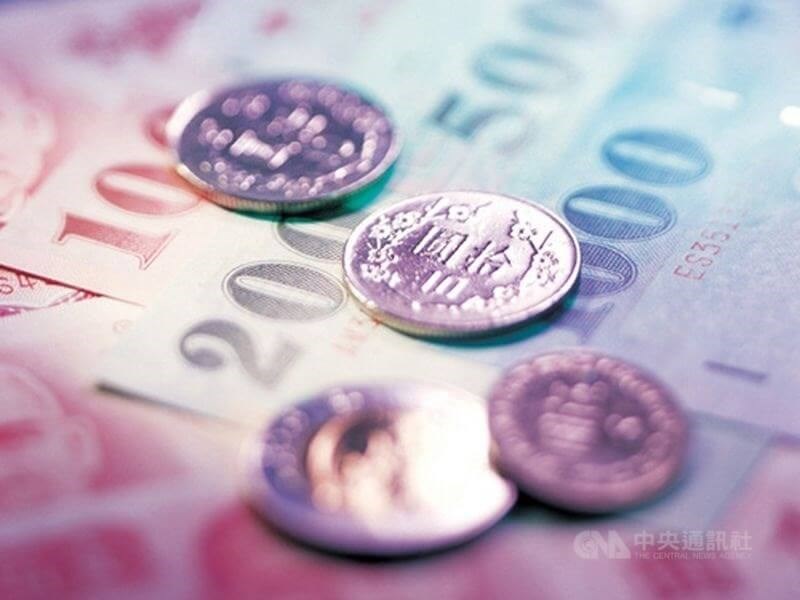
However, Tsai cautioned that fluctuations in the value of the Taiwan dollar against the U.S. dollar could affect GDP per capita calculations. If the Taiwan dollar depreciates against the U.S. dollar, GDP per capita measured in U.S. dollars will fall, and vice versa, he said.
According to Tsai, the GDP per capita for 2027 was estimated based on an exchange of around NT$32.35.
- Politics
Lai's WWII remarks warn of China's bid to reshape world order: Analysts
10/10/2026 07:27 PM - Business
Gasoline, diesel prices to remain unchanged next week: CPC
10/10/2026 06:09 PM - Politics
Opposition leaders criticize DPP, Lai in National Day remarks
10/10/2026 04:48 PM - Politics
Ex-President Tsai calls for deeper ties between Taiwan, Silicon Valley
10/10/2026 04:25 PM - Society
Filipino worker hospitalized, over 300 evacuated in Tainan dorm fire
10/10/2026 03:59 PM