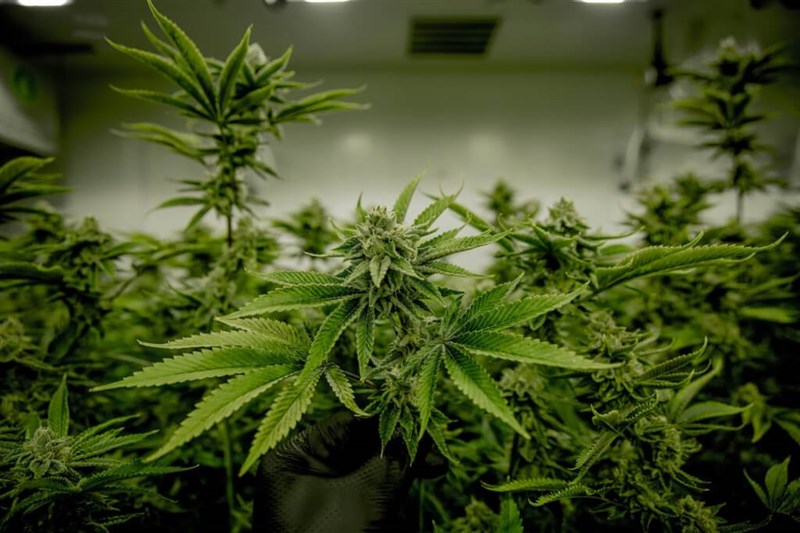
Taipei, June 3 (CNA) Taiwan is proposing to revoke the driver's licenses of people found to have used marijuana overseas if evidence of use is detected after they return to the country, even if the drug was consumed legally abroad, transportation officials said Wednesday.
The measure is part of a broader crackdown on drug-impaired driving following a series of drug-related traffic incidents.
• Harsher drug-driving penalties could take effect by end of 2026: minister
Under the planned revisions to the Road Traffic Management and Penalty Act, authorities would also be allowed to revoke the licenses of people found to have used Category 1 or Category 2 narcotics, even if they were not caught driving.
Users of Category 3 or Category 4 substances could face license suspension.
Marijuana is classified as a Category 2 narcotic under Taiwan's Narcotics Hazard Prevention Act. Although some countries permit recreational or medicinal cannabis use, Taiwan bans the possession, use, cultivation and transportation of marijuana products.
Questions have been raised about travelers who legally consume marijuana abroad and return to Taiwan with traces of cannabis still detectable in their bodies.
Addressing those concerns, senior Ministry of Transportation and Communications (MOTC) official Tsao Chin-wei (趙晉緯) said people returning to Taiwan must comply with Taiwanese law regardless of whether an activity is legal overseas.
Under the proposed amendments, authorities could suspend or revoke a person's driver's license as a preventive measure if police confirm drug use and report the case through an interagency notification system.
Tsao said the proposed administrative penalties would apply to individuals whose drug use is confirmed after they are stopped by police in Taiwan and reported through the notification system, unless police authorities can verify that the drug use occurred entirely overseas.
If police verify that the drug use occurred outside Taiwan's jurisdiction and do not report the individual through the interagency notification system, the MOTC will not process the license suspension or revocation, he added.
The revisions would also increase penalties for motorists caught driving after using drugs. Current license suspensions of one to two years would be replaced with outright revocation and a three-year ban on reapplying for a license.
Fines for drug-impaired driving would rise from NT$30,000 (US$954) to NT$120,000 for car drivers and from NT$15,000 to NT$90,000 for motorcyclists. Passengers aged 18 or older who knowingly ride with a drug-impaired driver could face fines of up to NT$15,000.
The ministry is also studying the feasibility of confiscating vehicles involved in drug-impaired driving cases.
Scholars' support
Tourism and transportation scholars expressed support for the proposed changes, saying they were unlikely to affect travel decisions.
Lee Chi-yuen (李奇嶽) of Taipei City University of Science and Technology said cannabis use is unlikely to be a deciding factor when people choose overseas destinations.
Wayne Liu (劉喜臨), a professor at National Kaohsiung University of Hospitality and Tourism, said marijuana is generally not the primary attraction for international travel and that individuals should bear responsibility for the consequences of their actions.
The amendments are expected to be submitted to the Executive Yuan later this month before being sent to the Legislature, with the ministry aiming for the measures to take effect by the end of the year.
- Politics
228 foreign guests to attend 2026 ROC National Day celebrations: MOFA
10/08/2026 08:53 PM - Business
September exports hit record monthly high, extend growth to 35 months
10/08/2026 08:52 PM - Politics
MAC slams Beijing over threats tied to Kevin Tsai's campaign appearance
10/08/2026 08:29 PM - Politics
Taipei mayor candidates Chiang, Shen spar over Songshan Airport plan
10/08/2026 08:22 PM - Society
Northeasterly winds to bring rain to parts of Taiwan over holiday weekend
10/08/2026 07:20 PM