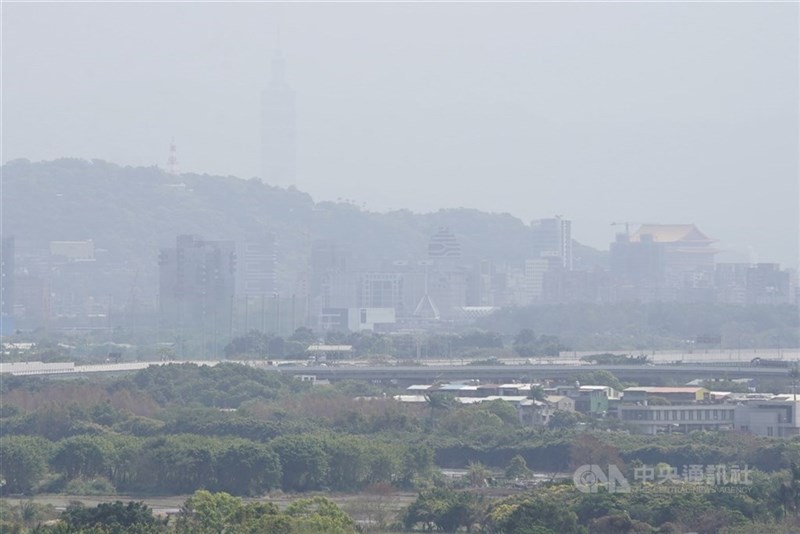
Taipei, June 21 (CNA) Although climate change could reduce overall PM2.5 pollution in Taiwan, the benefits are likely to be unevenly distributed, according to a new study analyzing more than two decades of weather, air-quality and geographic data.
Researchers at National Cheng Kung University (NCKU) found that average PM2.5 levels are likely to decline by 1.25-1.5 micrograms per cubic meter nationally in the coming decades.
The study found that warmer temperatures and increased rainfall generally help reduce PM2.5 levels, contributing to an overall decline in pollution nationwide.
However, researchers said climate change could also alter local weather patterns in ways that affect how pollutants accumulate and disperse, leading to growing regional differences in air quality.
In this scenario, areas in northeastern Taiwan, the Taichung-Changhua border region and parts of Kaohsiung and Pingtung could emerge as pollution "hotspots" between 2081 and 2100.
Corresponding author and NCKU Department of Geomatics Professor Wu Chih-da (吳治達) told CNA recently that the results suggest that air-quality policies in the future may need to focus more on local conditions rather than relying solely on national averages.
The study also highlighted the importance of monitoring regional pollution risks as Taiwan adapts to climate change, particularly in areas projected to face higher concentrations of fine particulate matter.
- Politics
12 mayoral candidates sign sustainability pledges ahead of elections
10/12/2026 01:14 PM - Politics
Taiwan resumes processing of visa applications from Moroccans
10/12/2026 12:54 PM - Politics
PLA drills not close to Taiwan: Defense Minister Koo
10/12/2026 12:18 PM - Sports
Lin finishes runner-up in men's singles at WTT China Smash
10/12/2026 10:55 AM - Business
U.S. dollar up in Taipei trading
10/12/2026 10:12 AM