Tainan, June 17 (CNA) Taijiang National Park in Tainan announced Wednesday that traffic controls will be implemented between July and September to protect mangrove land crabs from being killed during their peak breeding and migration seasons.
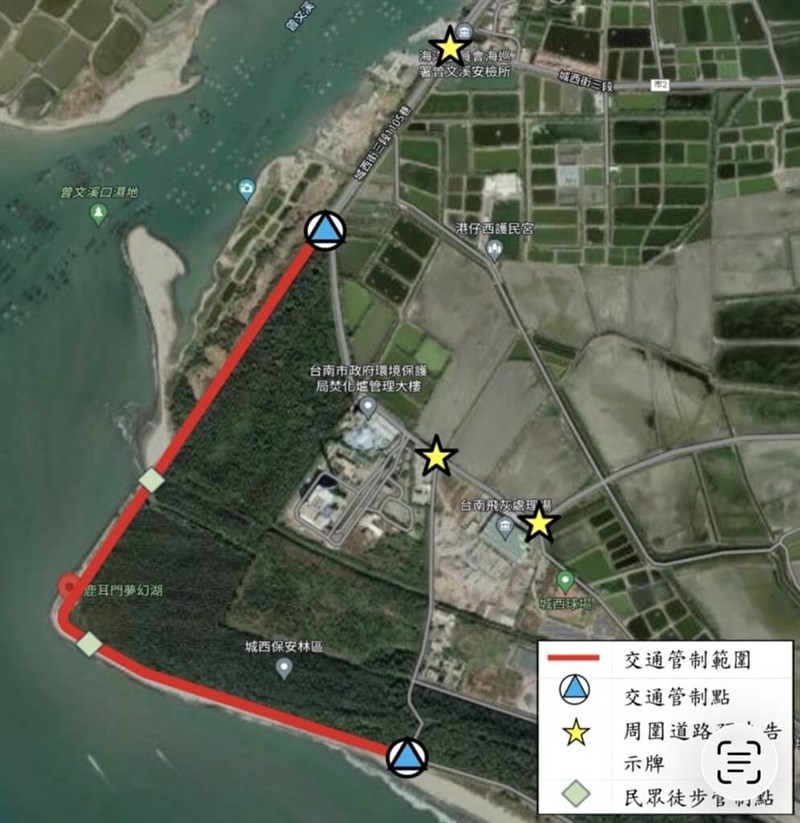
The controls will be in effect from 6:30 p.m. to 9:30 p.m. from July 1 to July 5, July 30 to Aug. 3, and Aug. 29 to Sept. 2 along a 2-kilometer stretch between Lane 1105, Section 3 of Chengxi Street and the Qingcaolun Coast Guard Post, a statement issued by park headquarters said.
During those periods, vehicles will be prohibited from entering the area except for official business, disaster prevention or rescue operations, the headquarters said.
It advised members of the public to also avoid nearby areas, as some land crabs will be migrating there as well.
Controlled zones will also be established for pedestrians at key migration hotspots. Visitors entering those areas are asked to follow local regulations and minimize disturbances to the crabs, it said.
Officers from the Seventh Special Police Corps will be stationed in the area, while volunteers will conduct surveys and patrols during the migration period.
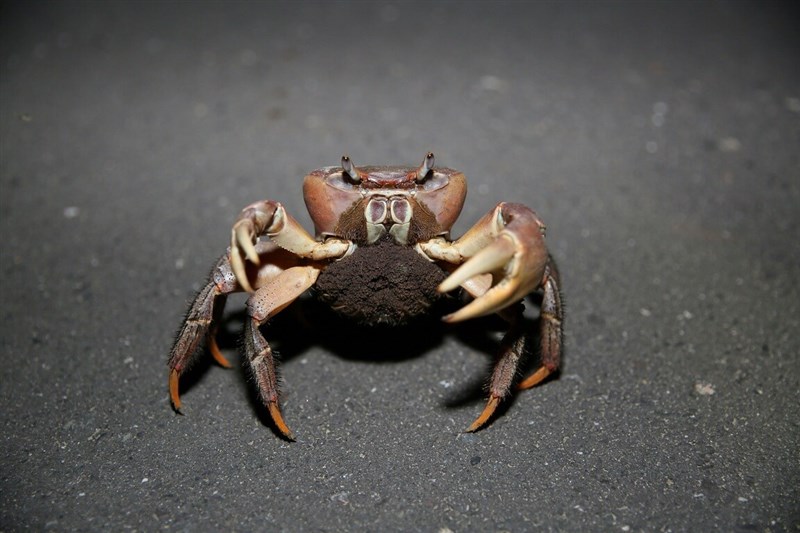
The mangrove land crab, also known as the chestnut crab, is Taiwan's largest terrestrial crab species. The nocturnal omnivore is primarily found around river mouths and in coastal forests, mangrove areas and marshlands.
According to park headquarters, the Chengxi Village area and the surrounding coastal forests are the species' most important habitat and support Taiwan's largest known population.
During the breeding season, female crabs migrate to the coast to release their eggs into the sea. The eggs hatch into zoea larvae, which develop through several molting stages before becoming megalopa larvae -- a post-larval stage of crabs -- and eventually returning to land habitats.
Because the migration route crosses roads near the coast, large numbers of crabs are vulnerable to being struck by vehicles, prompting the annual traffic restrictions.
- Sports
Taiwan boosts medal haul in multiple events at Asian Games on Friday
10/02/2026 08:55 PM - Society
Workers at Taiwan snack maker Kuai Kuai extend strike over relocation
10/02/2026 08:45 PM - Business
Chain businesses association seeks more foreign workers
10/02/2026 08:04 PM - Politics
Shen unveils Taipei education platform, Chiang defends free lunches
10/02/2026 06:45 PM - Politics
Taiwan receives first 2 F-16V Block 70s (update)
10/02/2026 06:39 PM