Taipei, June 16 (CNA) Taiwan's Centers for Disease Control (CDC) on Tuesday reported the country's youngest ever recorded case of Japanese encephalitis since it was made a notifiable disease, involving a female infant in Hualien County who is 3 months old.
The infant, who has not yet reached the age for vaccination, has no domestic or overseas travel history and no congenital diseases, according to the agency.
In late May, the baby girl developed symptoms of high fever and drowsiness and was taken to the emergency room, the agency said at a regular briefing.
She experienced recurrent high fevers and seizures and was confirmed to have Japanese encephalitis on Monday, the CDC said.
The infant has been hospitalized for three weeks with no improvement and remains in the intensive care unit. The source of infection is under investigation, the CDC added.
According to CDC statistics, including this newly reported case, Taiwan has recorded two local Japanese encephalitis cases this year, lower than the same period in 2023 and 2024, when between seven and 10 cases were reported.
The disease is seasonal, occurring mainly from May to October and generally peaking from June to July. Most cases occur in adults over 40, though all age groups are at risk, the CDC said.
CDC Epidemic Intelligence Center Deputy Director Li Chia-lin (李佳琳) said the family members have no symptoms, and no high-risk areas have been identified near the residence.
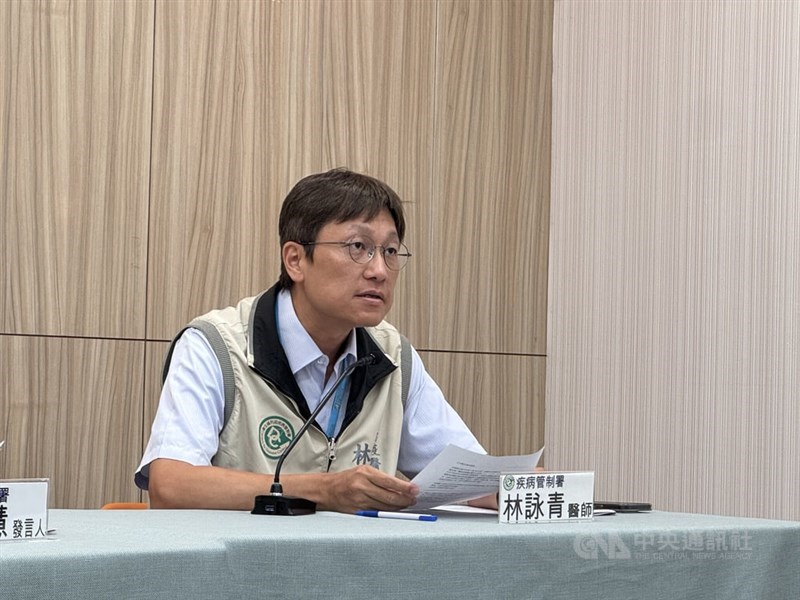
Most people infected with Japanese encephalitis show no obvious symptoms, but when symptoms do occur, they may include headache and high fever, CDC epidemiologist Lin Yung-ching (林詠青) said.
Severe cases can result in altered consciousness, disorientation, generalized weakness, coma or death, he added.
According to Lin, vaccination is the most effective form of prevention. In Taiwan, children are advised to receive the first dose at 15 months of age and a second dose one year later at a local health center or contracted hospital, he said.
Japanese encephalitis in Taiwan is mainly transmitted by mosquitoes, which typically breed in waterlogged rice fields, ponds and ditches.
The CDC urged members of the public to avoid outdoor activities in mosquito-prone areas at dawn and dusk.
- Society
Taiwan minimum wage hike to benefit 2.61 million workers: Labor Ministry
09/24/2026 09:15 PM - Society
New Taipei student critically injured in alleged scissors attack
09/24/2026 08:17 PM - Society
2-year sentences sought for Chinese men who illegally sailed to Taiwan
09/24/2026 08:10 PM - Politics
DPP ousts 18 members over independent local election bids
09/24/2026 07:11 PM - Society
Taiwan raises minimum monthly wage above NT$30,000
09/24/2026 05:58 PM