Agentic AI driving redesign of every computing platform: Nvidia's Huang
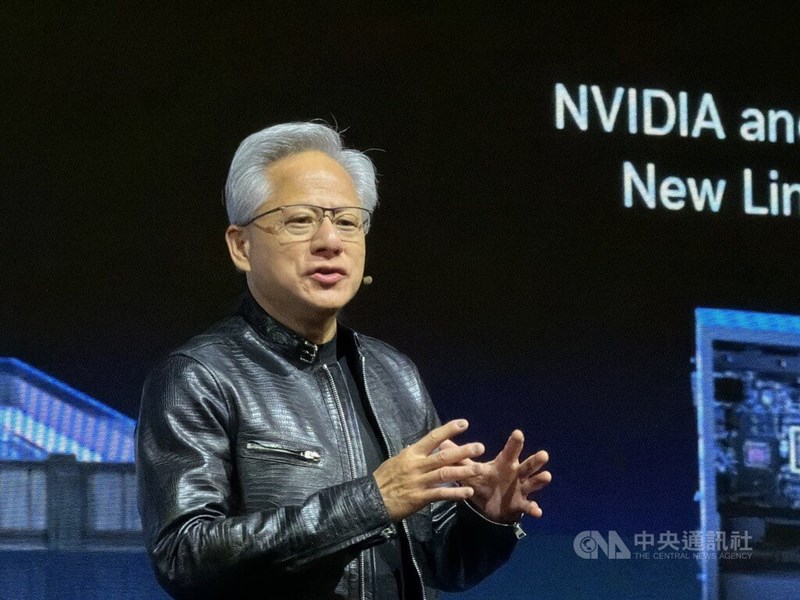
Taipei, June 2 (CNA) The rise of agentic artificial intelligence (AI) is creating a new computing architecture that will reshape everything from personal computers to robots and data centers, Nvidia Corp. founder and CEO Jensen Huang (黃仁勳) said Tuesday.
Speaking to international media in Taipei a day after delivering the opening keynote at Nvidia GTC Taipei, Huang described AI agents -- systems capable of reasoning, using tools and carrying out tasks autonomously -- as a fundamental shift in how computing systems are designed and operated.
"There's a new computing pattern," Huang said. "The architecture of an application. And this application is called an agent."
Unlike traditional software, which follows predefined instructions, agentic AI systems can understand context, reason through problems, access memory and use external tools to complete tasks, he said.
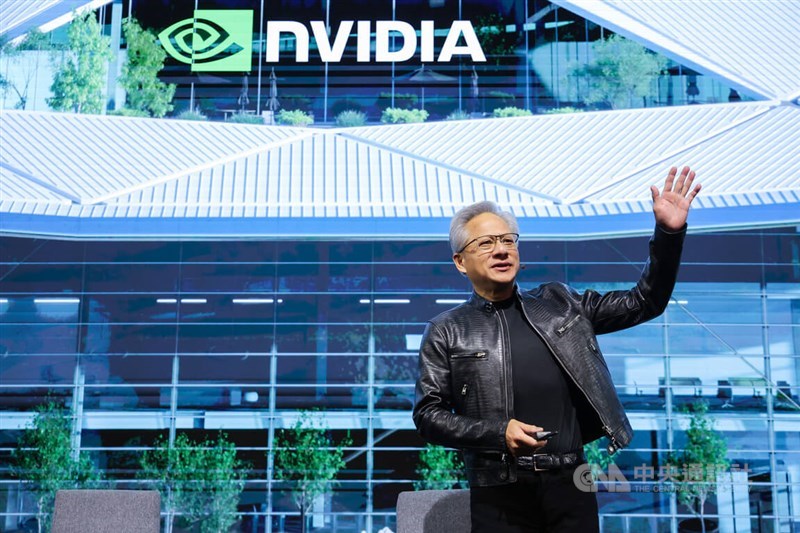
According to Huang, the same underlying architecture can be applied across a wide range of systems, from cloud-based AI services and enterprise servers to self-driving vehicles, humanoid robots and personal computers.
"Every edge device will become autonomous. Every edge device will have agentic systems," he said, citing personal computers, self-driving cars and telecommunications infrastructure as examples.
The world's installed base of PCs, in particular, will need to be reinvented for the AI era, Huang said.
"This is really a new beginning, a new line of computers," Huang said. "It's an assistant, not a tool."
● Nvidia's Huang says AI now a driver of profits, GDP growth
One example of that approach is RTX Spark, an AI-focused PC platform developed through collaborations involving Nvidia, Taiwan-based MediaTek Inc. and Microsoft Corp.
Introduced during Monday's keynote, the system is powered by Nvidia's N1X chip and is designed to run AI agents locally rather than relying entirely on cloud services.
Huang also suggested that many households could eventually run AI agents on dedicated local systems, much as they own home theater equipment today.
"Today, that computer sits there waiting for us to use it," he said. "In the future, when we leave it, it's doing stuff."
Those systems would likely operate as part of a broader distributed computing model spanning local devices, home servers and cloud infrastructure, Huang said.
Future AI applications will run across both cloud and edge environments instead of choosing one or the other, with tasks automatically distributed to wherever they can be performed most efficiently, he said.
Beyond PCs, Huang sees the same agentic architecture extending to autonomous vehicles, industrial machines and robots.
The next major wave of AI development will likely be "physical AI," he said, in which reasoning-based AI systems operate in real-world environments and perform physical tasks. Self-driving vehicles and humanoid robots are among the most visible examples.
- Sports
Lai lauds Taiwan athletes after lackluster Asian Games performance
10/06/2026 01:02 PM - Society
Seasonal winds to keep Taiwan cool but moisture declines: CWA
10/06/2026 11:30 AM - Politics
U.S. Senator Michael Bennet visits Taiwan
10/06/2026 10:40 AM - Society
Taiwan headline news
10/06/2026 10:18 AM - Business
U.S. dollar down in Taipei trading
10/06/2026 10:15 AM