Credible transition plans increasingly key to corporate financing: Executive
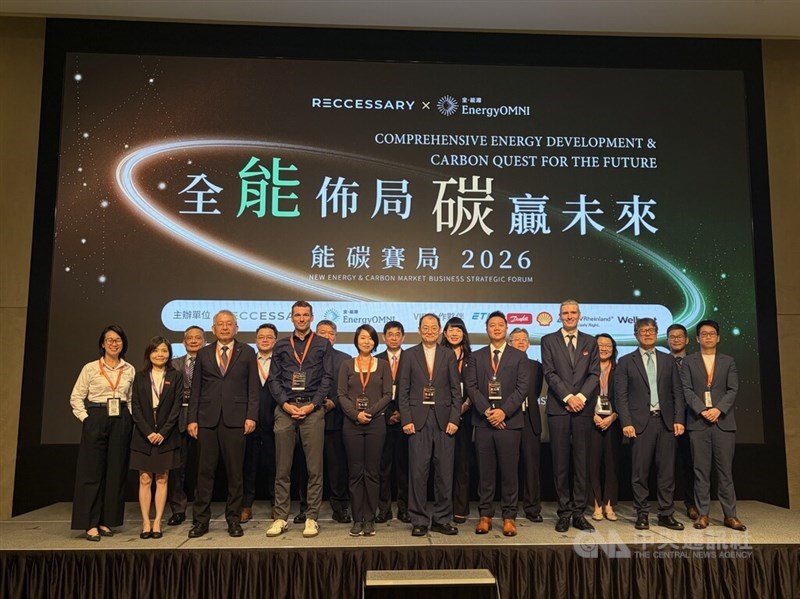
Taipei, Aug. 21 (CNA) Taiwanese companies seeking financing for their low-carbon transition will increasingly need to present credible plans with clear timelines, funding sources and measurable targets, a Deloitte Taiwan executive said Friday.
Cathy Lee (李介文), senior executive vice president at Deloitte Taiwan, told the 2026 New Energy & Carbon Market Business Strategic Forum in Taipei that financial institutions are under growing regulatory and market pressure to direct capital toward green activities and companies making demonstrable progress toward decarbonization.
Even businesses in carbon-intensive industries can qualify as "transitioning" if they adopt credible plans to meet the sustainability criteria set out in Taiwan's official guidelines, Lee said.
"When assessing a transition plan, the key is that it must have a clear timeline specifying when the company will achieve what level of emissions reduction," she said.
Companies must also explain how they will achieve their targets and finance the required investments, whether through borrowing, bond issuance or other channels, Lee said.
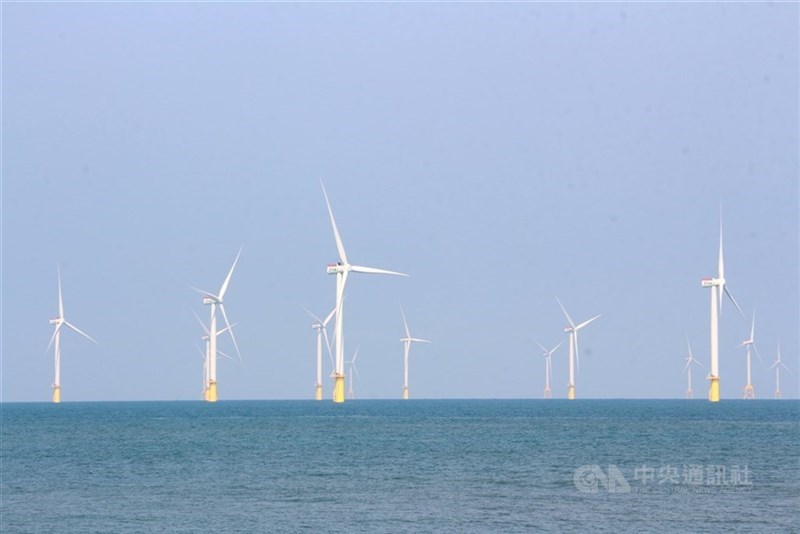
● Executive urges action to prevent gap in Taiwan's offshore wind projects
Under guidance issued by Taiwan's Financial Supervisory Commission, transition plans should cover five areas: the sustainability status of a company's economic activities, its transition vision, implementation strategy, indicators and targets, and governance arrangements.
Financial institutions can then assess the clarity of the timetable, the feasibility of proposed actions, the reasonableness of the financial plan and the mechanisms for monitoring progress, according to Lee.
She said Taiwan's green investment and financing had reached NT$5.25 trillion (US$164.8 billion), citing figures from the commission.
A green securities certification system also took effect in 2026, classifying listed and over-the-counter companies based on the proportion of their revenue derived from green or potentially green activities, Lee said.
Meanwhile, IFRS S1 requires companies to disclose sustainability-related risks and opportunities that could affect their financial prospects, while IFRS S2 focuses specifically on climate-related risks and opportunities.
Lee said the disclosures would help lenders and investors compare companies' transition commitments with their actual capital expenditure, revenue, costs and other financial information.
Asked about U.S. President Donald Trump's opposition to climate policies, CSRone Executive Vice President Richard Chen (陳建佑) said the broader direction of decarbonization remained unchanged despite political resistance.
"There may be some resistance, but the trend will not reverse," Chen said, arguing that climate risks, carbon costs, energy security and supply-chain requirements would continue to influence corporate decisions.
Lee said lenders would also monitor companies after financing was granted, potentially requiring periodic updates to ensure promised measures were implemented.
"A plan cannot be assessed only 10 years later," she said. "There has to be follow-up monitoring to confirm that it is proceeding as planned."
The two-day New Energy & Carbon Market Business Strategic Forum was organized by media platforms EnergyOmni and Reccessary.
- Sports
Taiwan to vie for U-18 Asian Baseball Championship bronze medal
09/12/2026 09:27 PM - Society
400th foreign high-level expert naturalized as ROC citizen since 2016
09/12/2026 08:38 PM - Business
CPC to raise domestic gasoline, diesel prices next week
09/12/2026 05:59 PM - Culture
Taiwan temple culture showcased in Poland
09/12/2026 05:52 PM - Business
Central bank under pressure to raise rates at upcoming meeting: Economists
09/12/2026 05:11 PM