CWA warns of extended heat in 2027 as Taiwan develops tiered response plan
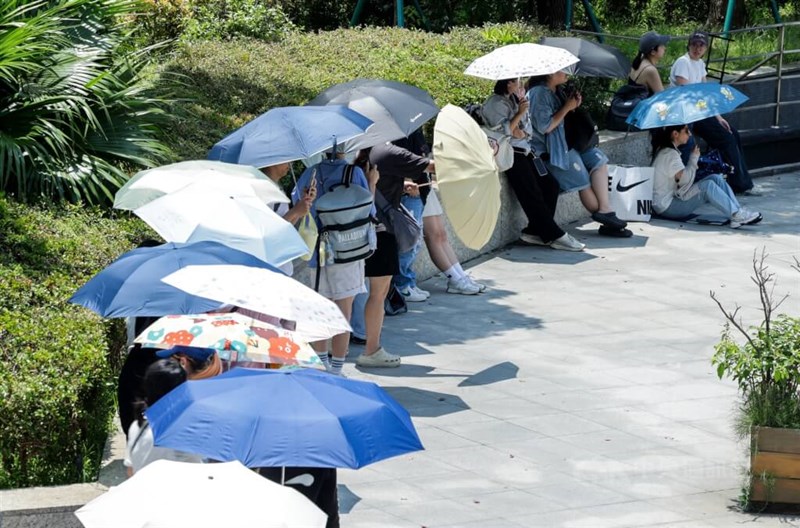
Taipei, July 5 (CNA) Taiwan is likely to experience a warmer-than-normal winter this year in the face of strong El Niño effects, with the extreme heat likely to extend into the spring and summer of 2027, according to the Central Weather Administration (CWA).
The agency said El Niño events typically peak in autumn and winter, increasing the likelihood of a warm winter in Taiwan. Based on historical patterns, the warming effect often persists into the following spring and summer, raising the probability of prolonged heat next year.
CWA forecaster Lo Tzu-ting (羅資婷) told CNA recently that while extreme heat has not increased steadily every year, the number of hot days has shown a gradual upward trend over time.
According to the agency, Taiwan experienced its most severe heat between 2020 and 2021 during the island's worst drought in a century, driven by the combination of an unusually strong subtropical high-pressure system, La Niña conditions and regional sea surface temperature changes.
Taipei recorded 100 days with temperatures above 35 degrees Celsius in 2020, the highest annual total since records began. The city's weather station also registered a record high of 39.7 degrees on July 24 that year.
In response to the growing risks posed by extreme heat, the Ministry of Environment (MOENV) is developing a tiered national heat response framework that will activate protective measures at different temperature thresholds for different groups.
The ministry said the framework will be incorporated into Taiwan's National Climate Change Adaptation Action Plan following a recent cross-agency exercise simulating three consecutive days of 40 degree heat.
Environment officials said schools, for example, could activate heat response measures at 36 degrees or 38 degrees, while support for vulnerable groups such as elderly people living alone and children could begin at lower thresholds of 32 degrees or 34 degrees.
Each government agency will also be required to specify what actions it should take at different heat levels, including when emergency measures should be activated, the MOENV said.
- Society
Taiwan headline news
09/30/2026 10:14 AM - Business
U.S. dollar up in Taipei trading
09/30/2026 10:12 AM - Business
Taiwan shares open higher
09/30/2026 09:09 AM - Business
Amazon taking part in Taiwan PCB maker's private placement
09/29/2026 09:06 PM - Sports
Taiwan snatches 2 more silvers in shooting, Kurash at Asian Games
09/29/2026 08:42 PM