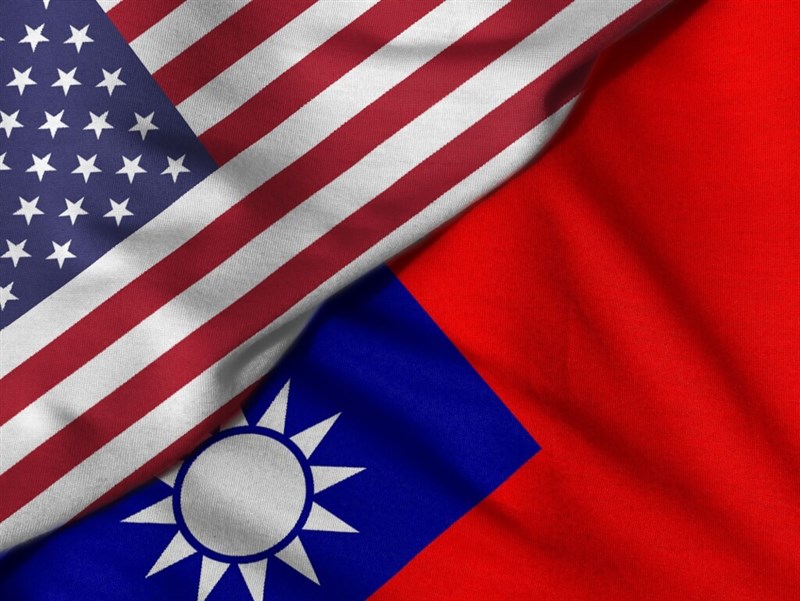
Taipei, June 30 (CNA) Nearly two-thirds of Americans believe Taiwan's security is important to the United States' own security and prosperity, with the view shared across party lines, according to the results of the 2026 Reagan Institute Summer Survey released Monday.
Overall, 66 percent of respondents agreed that Taiwan's security matters to the United States, including 72 percent of Republicans and 62 percent of Democrats, according to the survey conducted by the California-based Ronald Reagan Presidential Foundation and Institute.
The survey found that the bipartisan consensus around China-related issues is one of the strongest among Americans on foreign policy challenges.
Regarding Taiwan, 74 percent of respondents said they were concerned that China could attempt to take the island by force, 75 percent were concerned over its military buildup, and 74 percent were concerned over its human rights abuses.
The concerns extended to foreign policy. Over half (59 percent) said the U.S. should publicly pressure China to release political prisoners such as Jimmy Lai (黎智英), founder of the now-shuttered Hong Kong newspaper Apple Daily, even if doing so increased bilateral tensions, the report said.
Domestic issues linked to China drew even higher levels of concern, the survey found.
More than four-in-five respondents (82 percent) were concerned about China's role in the flow of fentanyl into the United States, including 85 percent of Democrats and 82 percent of Republicans.
Other top concerns included Chinese purchases of U.S. land (80 percent), the Chinese government's ability to spy on Americans (81 percent), and technology theft and unfair trade practices (79 percent).
Views were more divided over U.S. President Donald Trump's approach to China, the report said.
Following Trump's summit with Chinese President Xi Jinping (習近平) in mid-May, 44 percent of respondents said the administration's policy was "about right," including 59 percent of Republicans.
Democrats were more divided, as 37 percent said the administration was not tough enough on China and 32 percent said its approach was about right. Only 12 percent of respondents overall believed the administration had been too tough on Beijing, according to the report
The survey also found a clear generational divide, with concern over China increasing with age. On nearly every issue measured, the youngest respondents were 20 to 30 percentage points less likely than their oldest counterparts to express concern.
Human rights issues, however, showed a smaller age gap. Concern over China's censorship, surveillance and restrictions on free expression was shared by 73 percent of the youngest respondents and 75 percent of the oldest.
On human rights abuses in Hong Kong and against Uyghurs, 64 percent of younger adults and 77 percent of the oldest respondents said they were concerned.
One question the survey did not address was how Americans felt about intervening military if China were to attack Taiwan.
The nationwide survey was conducted among 1,555 respondents through telephone interviews, including both mobile phones and landlines, as well as online questionnaires.
It has a margin of error of plus or minus 2.5 percentage points at the 95 percent confidence level.
The Ronald Reagan Presidential Foundation and Institute is a nonprofit organization established by former U.S. President Ronald Reagan. It describes itself as a nonpartisan organization that operates a policy institute in Washington, D.C.
- Business
Amazon taking part in Taiwan PCB maker's private placement
09/29/2026 09:06 PM - Sports
Taiwan snatches 2 more silvers in shooting, Kurash at Asian Games
09/29/2026 08:42 PM - Business
Taiwan economic indicators stay strong for 9th straight month: NDC
09/29/2026 07:44 PM - Politics
AIDC, Corrections Agency hold counter-drone drill
09/29/2026 07:15 PM - Politics
KMT, TPP legislators reject all 27 of Lai's Control Yuan nominees
09/29/2026 06:55 PM