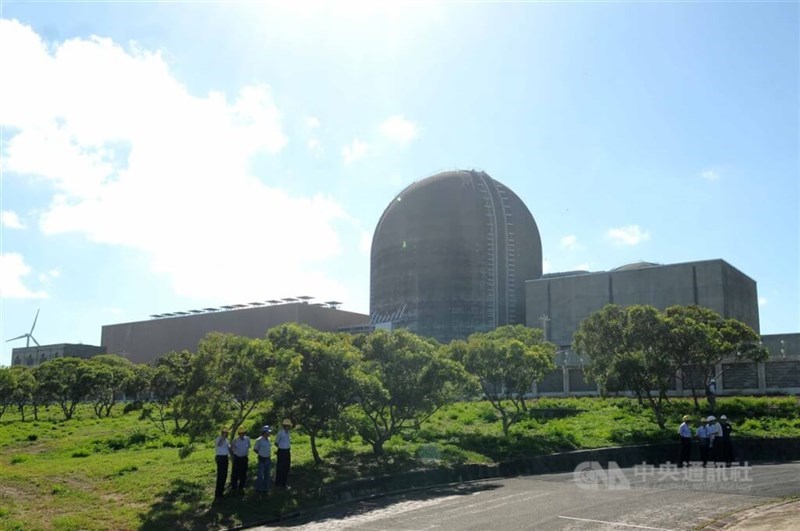
Taipei, March 11 (CNA) Taiwan's state-owned power company will submit a plan this month to re-start the decommissioned No. 3 (Maanshan) Nuclear Power Plant in Pingtung, setting the stage for it to begin generating electricity as early as 2028, Economics Minister Kung Ming-hsin (龔明鑫) said Wednesday.
During a hearing at the Legislature, Kung was asked by Taiwan People's Party lawmaker Liu Shu-pin (劉書彬) whether the government is considering using nuclear energy as a stable energy source in the event of a wartime blockade.
Citing a war game exercise done by a U.S. think tank, Liu noted that if China blockaded the Taiwan Strait, Taiwan would exhaust its natural gas reserves in 10 days, its coal reserves in seven weeks, and its oil reserves in 20 weeks.
That would leave it with only 20 percent of its current power generation.
In response, Kung said that a safety inspection of the No. 3 nuclear plant is already underway, and that the state-run Taiwan Power Co. (Taipower) is expected to submit a plan later this month to re-start power generation at the plant.
Asked by Liu if that could happen by 2028, Kung said the government has signed a contract with Westinghouse to check the status of the plant's generators.
If the equipment in the plant is in good condition, and not too much needs to be replaced, the timeline can be shortened, Kung said.
Kung's response largely tracked with comments he made late last year, when he estimated safety inspections would take 1.5-2 years, with a report submitted to the Nuclear Safety Commission in mid-2027, and the official reopening in 2028 at the earliest.
Taiwan's U-turn on nuclear power
Following Japan's 311 earthquake and subsequent Fukushima nuclear accident in 2011, opposition to nuclear power in Taiwan grew.
Supported by the Democratic Progressive Party (DPP), the anti-nuclear movement succeeded in pressuring the then-Kuomintang (KMT) government to halt and seal the still-under-construction No. 4 (Lungmen) Nuclear Power Plant in New Taipei in 2014.
After taking power in 2016, the DPP made plans to realize a "nuclear-free homeland" by 2025.
It proceeded to phase out electricity generation at the No. 1 (Jinshan) Nuclear Power Plant in 2019, the No. 2 (Kuosheng) Nuclear Power Plant in 2023, and the No. 3 Nuclear Power Plant on May 17 of last year.
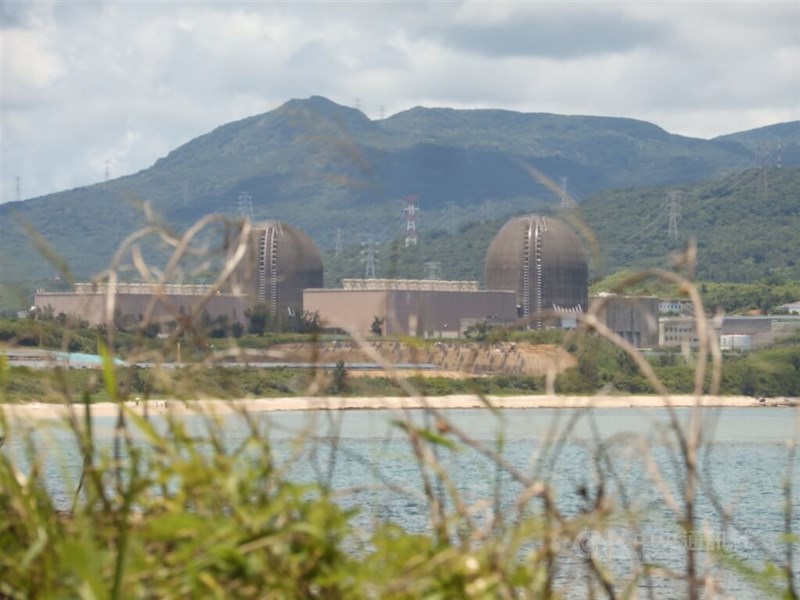
Under the policy, nuclear power as a share of Taiwan's energy mix dropped from 19 percent in 2011 to zero, with much of the gap filled by fossil energy sources.
According to Energy Administration data, 47.8 percent of Taiwan's energy generation in 2025 came from natural gas, while coal accounted for 35.4 percent and renewables made up 13.1 percent.
Fuel oil, pumped hydro, and the last few months of nuclear power from the No. 3 plant accounted for the rest.
Since Taipower closed the No. 3 plant, fears of China blocking energy imports from reaching Taiwan in the event of a war, as well as issues such as air pollution and increased power demand from AI, have prompted the government to abruptly reverse its position.
Last November, the government said Taipower was expected to submit plans to reopen the No. 2 (Kuosheng) plant in New Taipei and No. 3 (Maanshan) plant in Pingtung.
Taipower concluded, however, that restarting the No. 1 (Jinshan) Nuclear Power Plant -- Taiwan's first nuclear power plant, also located in New Taipei -- was not feasible because its two reactors were decommissioned in 2018 and 2019, and its equipment had severely aged.
When running at capacity, the No. 3 plant's two generators can account for about 5.5-6 percent of Taiwan's total electricity generation.
-
Business
Taiwan shares close down 0.30%
03/26/2026 01:58 PM -
Culture
Taiwan to send Mandarin teachers to Tibetan schools in India
03/26/2026 12:59 PM -
Society
Magnitude 4.7 earthquake shakes off southeastern Taiwan
03/26/2026 12:48 PM -
Business
SK Hynix, 3 other tech giants to take stakes in Nanya Technology
03/26/2026 12:00 PM -
Politics
Mayor aims to make New Taipei more cosmopolitan after Australia visit
03/26/2026 11:38 AM